Slab leak under the foundation
We pressure-test the slab loop, scan with acoustic and thermal equipment, and mark the break within inches. You get a repair plan that opens one small section of floor instead of trenching the room.
Electronic Leak Detection in Houston uses acoustic listening devices, thermal imaging cameras, and tracer gas detectors to pinpoint hidden leaks under slabs, behind walls, and underground. If your water bill jumped, your floors feel warm, or you hear running water when everything is off, we find the source fast. We serve homeowners and businesses across Harris County with same-day and 24/7 emergency service.
Tell us what is happening. Our local team will confirm your visit shortly.
Call Now 8328394984 → No spam. No obligation. Just practical help.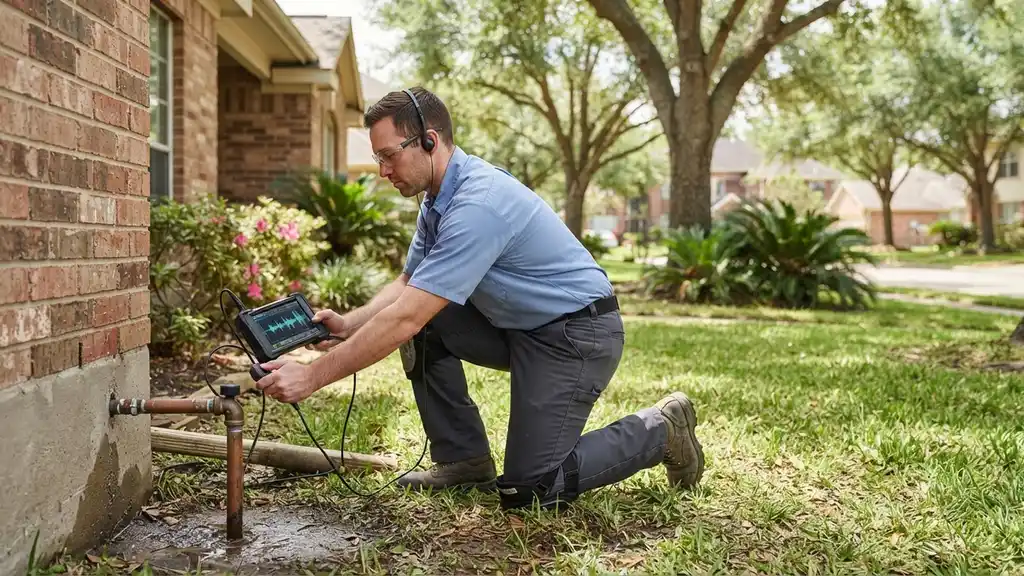
Electronic Leak Detection in Houston is a non-invasive diagnostic service that uses amplified listening equipment, infrared cameras, and tracer gas to locate hidden water leaks without breaking concrete or tearing out walls. We pressurize the line, scan the slab or wall, and mark the exact leak point. Most residential jobs take two to four hours from arrival to a marked location.
Houston's clay soil shifts with every wet and dry cycle, and that movement cracks copper pipe and pulls apart PVC joints under slab foundations. Add 60-year-old cast iron drains in The Heights and Montrose, and you get pinhole leaks, slab leaks, and root intrusion that a visual inspection will never find. If you need electronic leak detection Houston TX near me, we cover the entire metro and surrounding suburbs.
Every locate includes the full diagnostic, the marked location, and a written report. Repair work is quoted separately so you can decide who does it. No hidden fees, no surprise add-ons.
We isolate the suspect line and pressurize it with a hydrostatic test pump or pressure testing gauge. You see the gauge hold or drop. This step confirms a leak exists before we spend time scanning.
We walk the slab, wall, or yard with an acoustic listening device and a thermal imaging camera. The two tools cross-check each other, which cuts down on false positives and narrows the leak to a small zone.
For gas lines, drains, or non-pressurized pipes, we introduce a safe tracer gas and sniff with a detector. This finds leaks that acoustic equipment cannot hear. It is included when the line type calls for it.
We mark the leak with paint or tape within a 6-to-12-inch zone. You see the mark before we leave. That mark is what your plumber or our repair crew works from, so nobody cuts in the wrong place.
You get a report listing the leak location, pipe material, pressure readings, and photos. It is formatted for insurance claims and for handing to your own plumber. You keep a record of what was found and where.
We ask about your water bill, where you see moisture, and whether the meter spins with everything off. That five-minute call tells us whether to bring slab equipment, pool gear, or gas detection. You get an arrival window and a flat diagnostic price before we hang up.
On arrival we isolate the suspect line and pressurize it with a hydrostatic test pump or pressure testing gauge. If the gauge drops, we know the line is leaking. If it holds, we move to the drain or gas side. This step takes 15 to 30 minutes and rules out half the guesswork.
We walk the slab or wall with an acoustic listening device and a thermal imaging camera. The microphone picks up the hiss of escaping water; the infrared camera shows the temperature difference. We cross-check with a moisture meter and, on gas lines, a tracer gas detector.
Once we have a signal, we narrow it to a 6-to-12-inch zone and mark it with paint or tape. We re-pressurize and confirm the reading before we call it. You see the marked spot and the pressure readings on the gauge yourself.
You get a written report with the leak location, line type, pipe material, and recommended repair. We can hand it to your insurance adjuster or your regular plumber. If you want us to handle the repair, we quote it on the spot with no pressure.
Purpose-built equipment, used by trained technicians — so the job is done accurately the first time.
Amplifies the sound of pressurized water escaping a pipe. We use it on slab loops, supply lines, and underground runs to narrow the leak to a small zone.
Shows temperature differences caused by escaping water. We scan slabs, walls, and ceilings fast, then confirm with acoustic equipment. It covers large areas without demolition.
Sniffs for a safe tracer gas introduced into gas lines, drains, and non-pressurized pipes. It finds leaks that acoustic equipment cannot hear.
Pressurizes a line to a set pressure so we can watch the gauge. A dropping gauge confirms a leak; a holding gauge tells us to look elsewhere.
Reads line pressure during testing. We use it on supply lines, gas lines, and pool plumbing to confirm a leak before and after a repair.
Goes inside drains and sewer lines to show breaks, root intrusion, and offset joints. We use it with electronic detection to confirm the leak point.
Reads moisture content in drywall, wood, and concrete. It confirms what thermal imaging suggests and helps us map how far moisture has traveled.
A homeowner in The Heights had a water bill that jumped from $90 to $260 in one cycle. The meter spun with everything off, and a warm spot appeared in the hallway. Two plumbers guessed at the location and wanted to open three rooms of flooring.
We pressure-tested the slab loop, scanned with acoustic and thermal equipment, and marked a pinhole leak in the copper line within two hours. The repair opened a two-foot section of floor. The water bill dropped back to $95 the next cycle.
A Clear Lake homeowner was losing an inch of water a day and adding chemicals twice a week. Two pool companies guessed at the shell and wanted to drain and resurface. The deck was showing a small crack near the skimmer.
We pressure-tested each pool line and found a break in the return line under the deck. The leak was marked within six inches. The repair opened one small section of decking, and the pool has held level since.
A Bellaire property manager had a soggy side yard and a spinning meter. The city said the leak was past the meter, so it was the owner's problem. Two locators marked different spots, and the yard was about to be trenched end to end.
We isolated the main, pressure-tested it, and used acoustic listening to find the break within four feet of the foundation. The trench was three feet long. The meter stopped spinning the same day.
Most leaks we find in Houston fall into five categories. Each one has a different signature, and each one needs a different electronic tool to confirm.
Ask a pro →We pressure-test the slab loop, scan with acoustic and thermal equipment, and mark the break within inches. You get a repair plan that opens one small section of floor instead of trenching the room.
Electronic listening finds the hiss of escaping water behind drywall or under a slab. We mark the spot, confirm with pressure testing, and tell you whether a spot repair or a repipe is the smarter call.
We run a pipe inspection camera, pressure-test the line, and use electronic detection to find the break or offset joint. You get a marked location and a straight answer on spot repair versus replacement.
We isolate the main, pressure-test it, and use acoustic listening to find the break underground. The leak is marked before anyone digs, so the trench is small and targeted.
$180 - $850 depending on scope
Typical 2026 pricing for electronic leak detection in Houston runs $180 to $450 for residential locates and up to $850 for commercial or deep underground work. The fee covers the full diagnostic, the marked location, and the written report. If you approve the repair with us, we credit the diagnostic fee toward the work. No hourly meter, no surprise add-ons, and no charge if we cannot find the leak.
One accurate locate saves you thousands in unnecessary demolition and weeks of guessing. We credit the diagnostic fee toward the repair if you hire us, so the locate effectively costs you nothing when we do the work.
A slab loop or exposed wall line is faster to scan than a deep underground main or a pool line under decking. Access drives time, and time drives cost. We tell you which category your job falls into when you call.
A 1,500-square-foot home has less slab to scan than a 4,000-square-foot home or a commercial building. Larger slabs take longer to walk with acoustic and thermal equipment, which affects the diagnostic fee.
One line is one test. If we have to isolate and pressure-test the supply, drain, and gas lines to find the leak, that adds time. We quote the number of lines up front so there is no surprise.
A 2 a.m. burst pipe or a holiday weekend call carries a higher rate than a weekday appointment. We tell you the after-hours fee before we dispatch, so you can decide whether to wait.
“Our water bill doubled and we could hear water running at night. Leak Detection The Heights came out the same day, pressure-tested the slab, and marked a pinhole leak in the copper line within two hours. The plumber only had to open a two-foot section of floor. Saved us thousands in concrete work.”
Marcus T.Homeowner, The Heights
✓ Verified“We manage a 12-unit building near 77002 and had a mystery leak in a commercial space. Their tech used thermal imaging and acoustic equipment to find a failed joint behind a wall. The report was clean enough that our insurance adjuster approved the claim without a second inspection.”
Priya S.Property Manager, Downtown Houston
✓ Verified“Pool was losing an inch a day and two other companies guessed wrong. Leak Detection The Heights pressure-tested the lines and found a break in the return line under the deck. They marked it, we fixed it, and the pool has held level since. Straight shooters, fair price.”
Danny R.Homeowner, Clear Lake
✓ VerifiedMost residential locates run $180 to $450 in 2026, depending on whether we are scanning a slab, a pool, or a gas line. Commercial and underground jobs can reach $850. The fee covers the full diagnostic, the marked location, and the written report. If you approve the repair with us, we credit the diagnostic fee toward the work.
On accessible slab and wall leaks, our locate accuracy runs above 95 percent within a 6-to-12-inch zone. Accuracy drops slightly on deep underground lines or pipes under thick rebar, where we may need tracer gas to confirm. We always cross-check with pressure testing before we mark, so you are not paying for a guess.
Leak Detection The Heights offers electronic leak detection across Houston and Harris County, including Downtown, The Heights, Montrose, River Oaks, and the Energy Corridor. We are state-licensed, insured, and have been locating leaks since 2013. Call 832-839-4984 for same-day or 24/7 emergency service.
Electronic detection is the umbrella; acoustic listening is one tool inside it. We use acoustic microphones for pressurized lines and add thermal imaging for slab leaks and tracer gas for gas or non-pressurized lines. Using both together is more accurate than acoustic alone, especially on Houston's clay soil where sound travels unevenly.
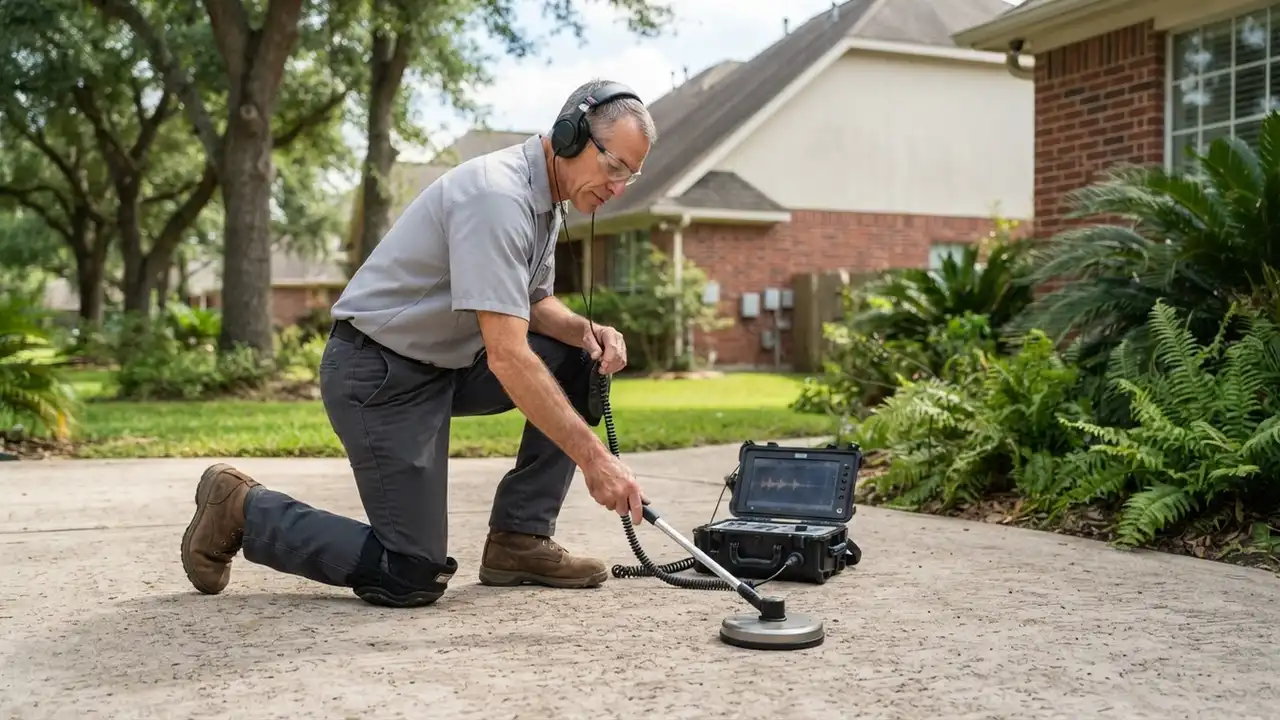 Slab Leak DetectionElectronic detection is the first step in any slab leak job. We pinpoint the break under your foundation, mark it, and hand off a repair plan that keeps concrete cutting to a minimum. Most Houston slab leaks start as a warm spot on the floor or a spinning water meter.Explore →
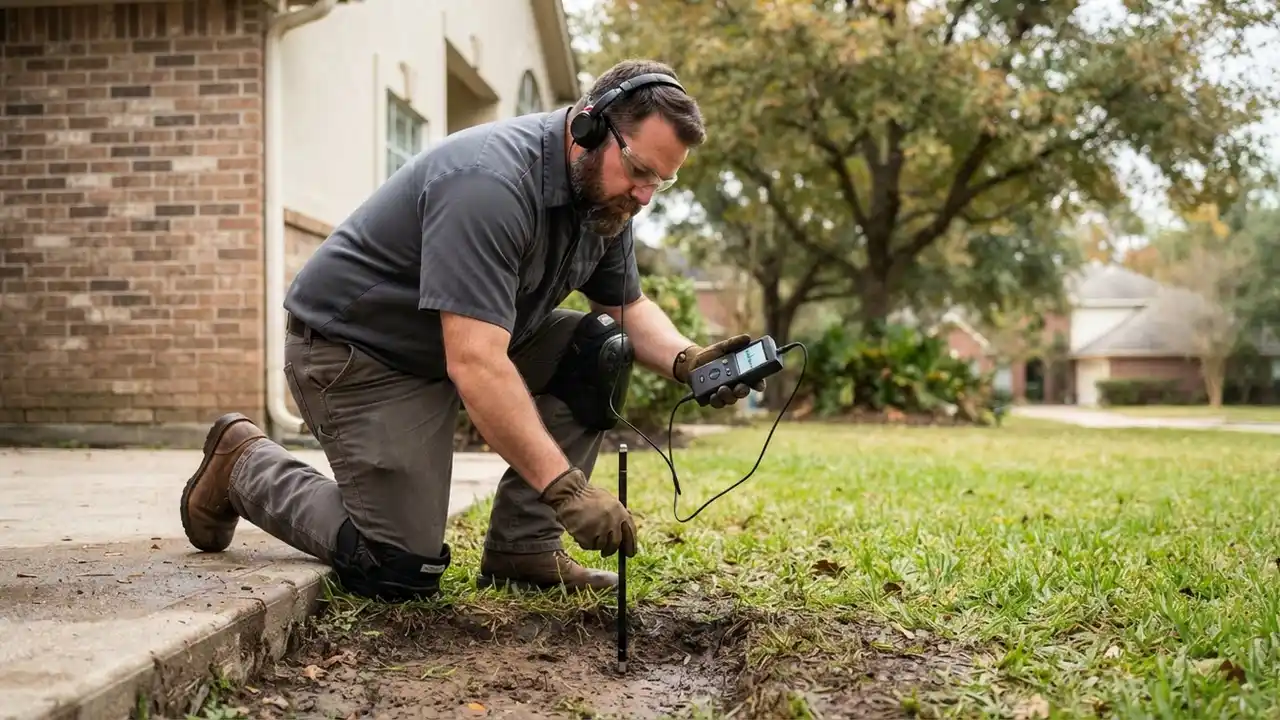 Foundation Leak DetectionFoundation movement in Houston often traces back to a hidden leak washing out soil. We use electronic scanning to find the source before an engineer blames the soil. Fixing the leak first can stop the movement and save you thousands in pier work.Explore →
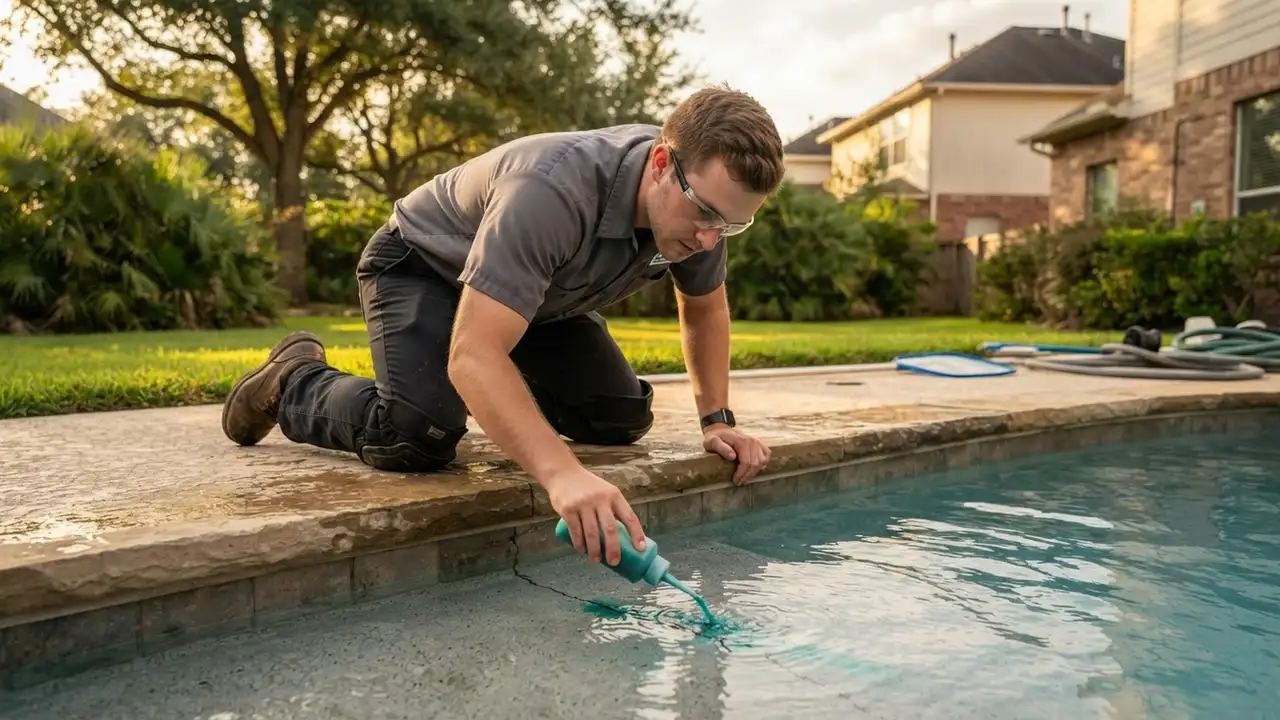 Pool Leak DetectionPool leaks in Clear Lake and Sugar Land lose an inch or more of water a day. We pressure-test the plumbing and use electronic listening to separate a shell leak from a line leak. You get a marked location before anyone starts digging up decking.Explore →
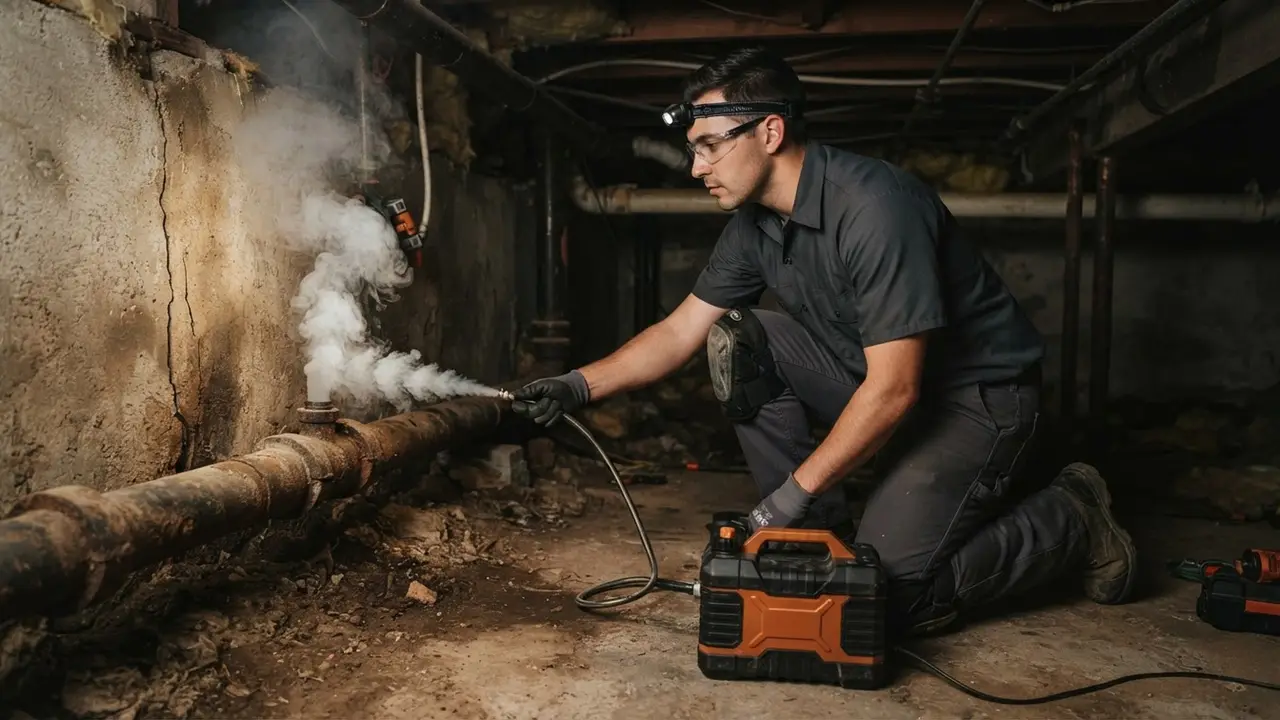 Sewer Line Leak DetectionSewer leaks do not always show water above ground. We run a pipe inspection camera and pressure-test the line to find breaks, root intrusion, and offset joints. Electronic detection confirms the leak point before we recommend spot repair or full replacement.Explore →
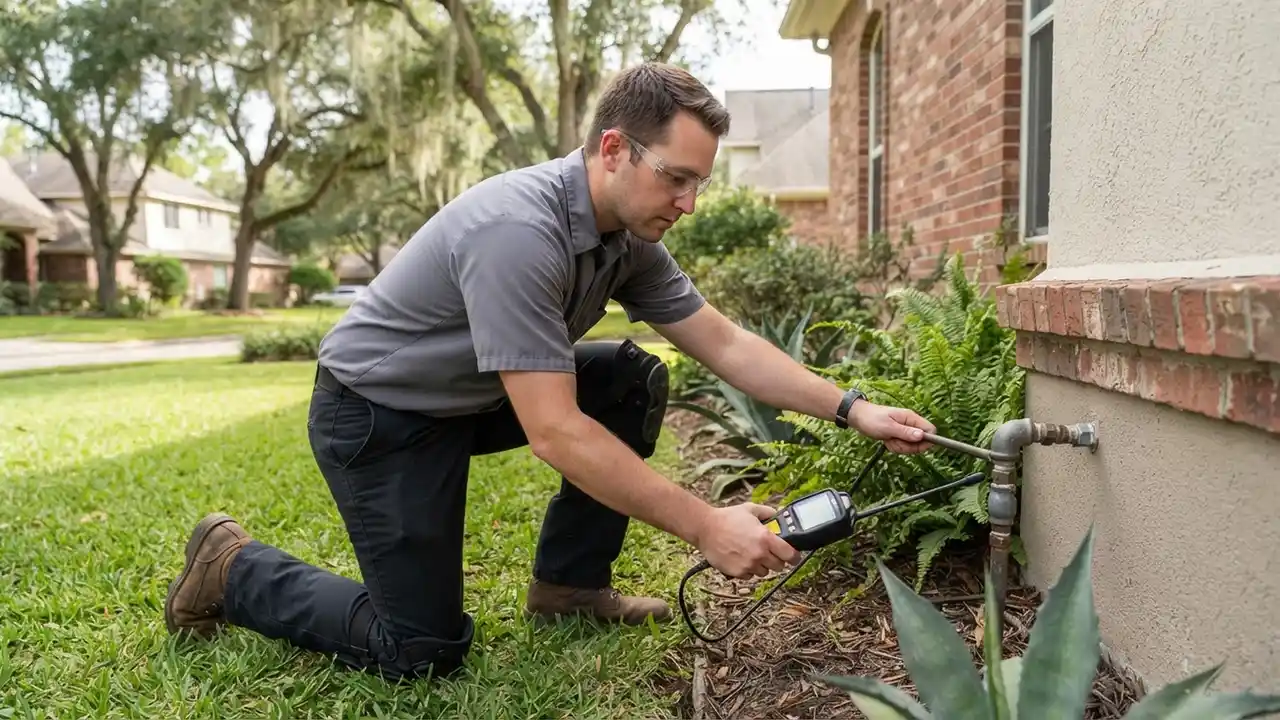 Gas Leak DetectionGas leaks need a tracer gas detector, not a water microphone. We pressure-test the line and use electronic sniffers to find the leak at fittings, valves, or underground runs. If you smell gas, leave the house and call us from outside.Explore →
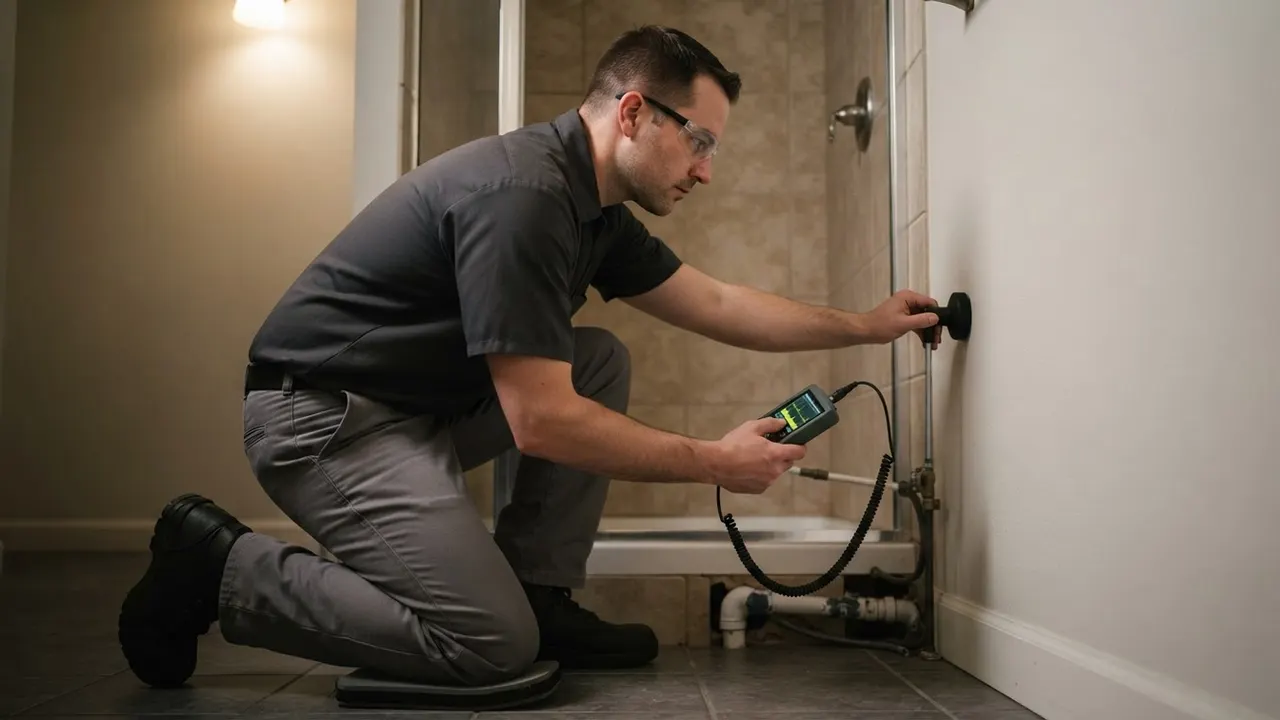 Plumbing Leak DetectionSupply, drain, or fixture leak, we find it. Electronic detection narrows the search to a single line and a single spot, so your plumber is not opening three walls to find one pinhole. We work on copper, PEX, PVC, and cast iron.Explore →
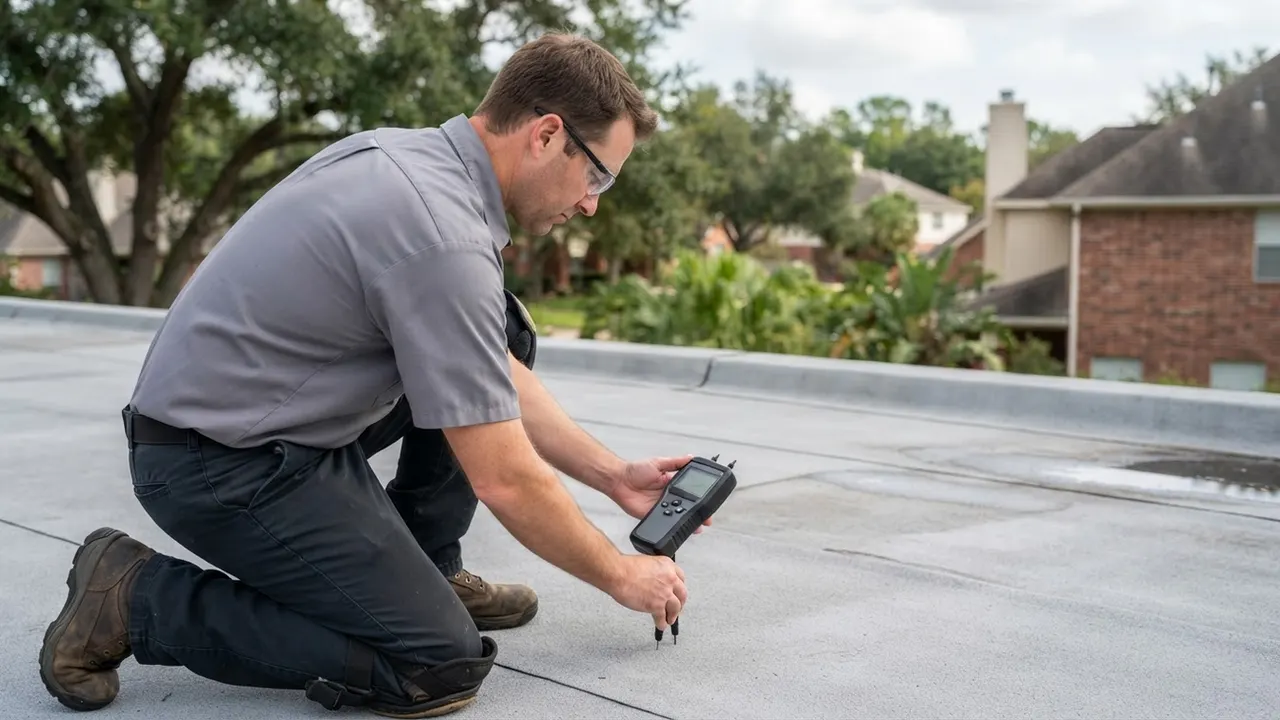 Roof Leak DetectionRoof leaks after a Houston storm can travel along framing before they show on your ceiling. We use moisture meters and thermal imaging to trace the path back to the entry point. That saves you from replacing drywall twice.Explore →
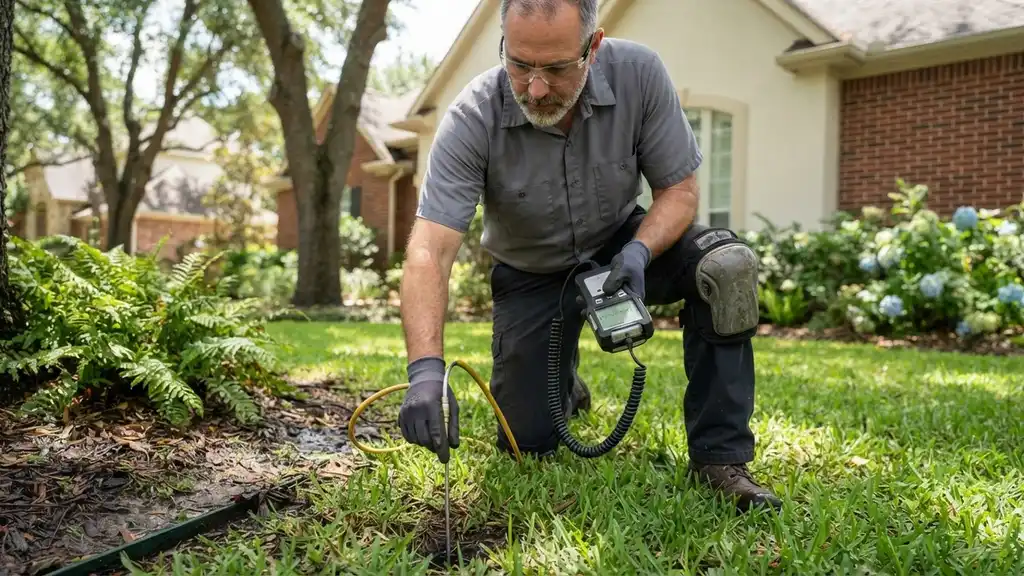 Irrigation System Leak DetectionA broken irrigation zone can waste thousands of gallons a month and go unnoticed. We isolate each zone, pressure-test it, and use electronic listening to find the break underground. You get a marked spot before anyone digs up the lawn.Explore →
We answer the phone 24/7 and run same-day appointments across Harris County. One flat diagnostic fee, a marked leak location, and a written report you can use. Call 832-839-4984 now and we will tell you exactly when we can be there.
Book a Leak Locate 8328394984 →Call us at 832-839-4984 or send an email and we will get back to you fast. We answer the phone 24/7 for emergencies and schedule standard detections same day or next day across Houston and Harris County. Tell us what you are seeing and we will give you a flat detection price over the phone.