Water bill doubled with no change in usage
We isolate the supply lines, pressure-test each side, and use acoustic and thermal tools to pinpoint the leak. Most customers see their bill return to normal within one billing cycle after the repair.
Slab Leak Detection in Houston is the fastest way to stop water from silently destroying your foundation. If your water bill spiked, your floors feel warm, or you hear running water when everything is off, we pinpoint the leak with acoustic listening devices and thermal imaging cameras. We serve homeowners across Harris County and The Heights, and we fix the line before the damage spreads.
Tell us what is happening. Our local team will confirm your visit shortly.
Call Now 8328394984 → No spam. No obligation. Just practical help.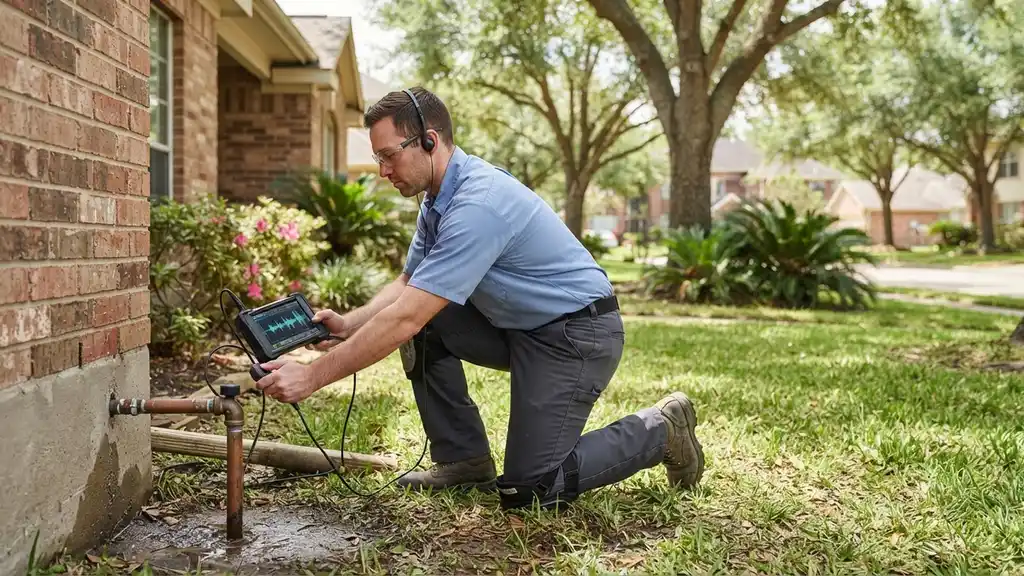
Slab Leak Detection in Houston is a diagnostic service that locates water leaks beneath your home's concrete foundation without breaking up the floor. We pressurize the system, listen for the leak with an acoustic listening device, scan the slab with a thermal imaging camera, and confirm the exact spot with a moisture meter or tracer gas detector. You get a marked location, a written finding, and a repair plan, not a crew guessing where to jackhammer.
Houston's clay soil swells and shrinks with every wet and dry cycle, and that movement stresses copper pipe and PVC pipe under slab until pinhole leaks open up. Add 60-plus inches of annual rain and older homes in The Heights and Garden Oaks with original 1950s plumbing, and you have the perfect conditions for a hidden slab leak. If you have been searching for slab leak Detection Houston TX near me, we run the full diagnostic the same day you call.
Every diagnostic includes the full tool kit: acoustic listening, thermal imaging, pressure testing, and a written report. If you approve the repair, we credit the diagnostic fee toward the work. Here is what you get when you book a slab leak detection with us.
We isolate the hot and cold supply lines and pressurize each with a hydrostatic test pump. A dropping gauge tells us which side is leaking, which cuts the search area in half before we even pick up the acoustic device.
We walk the slab with an acoustic listening device and a FLIR thermal imaging camera. The microphone picks up the hiss of escaping water, and the camera shows the temperature difference. We mark the spot with tape so you can see it.
A moisture meter confirms the extent of the water damage around the leak. We map the wet zone on a floor plan so you know whether the leak has spread under the flooring, baseboards, or adjacent rooms.
You get a one-page report with the leak location, pipe material, cause, and recommended repair. We include photos and moisture readings, which is exactly what your insurance adjuster needs to process a claim.
If the leak is under the slab, we give you a flat-rate price to open the slab, repair the pipe, pressure-test it, and patch the concrete. No hourly billing, no surprise charges, and the diagnostic fee is credited toward the repair.
After the repair, we pressure-test the line again and re-scan the slab with the thermal camera to confirm the leak is gone. You get a signed verification sheet for your records and your warranty.
You describe the symptoms: high bill, warm floor, sound of running water, or a crack in the tile. We ask three or four questions to narrow it down and give you a realistic arrival window. Most calls get a technician within 2 to 4 hours.
We shut off the main and isolate the hot and cold sides using the hydrostatic test pump. This tells us whether the leak is on the supply side, the drain side, or under the slab itself. Takes 20 to 30 minutes.
We walk the slab with an acoustic listening device and a FLIR thermal imaging camera. The microphone picks up the hiss of pressurized water, and the camera shows the temperature difference where hot water is escaping. We mark the spot with tape.
A moisture meter and tracer gas detector confirm the location before we commit. If the acoustic and thermal readings disagree, we run a second pass with the pipe inspection camera or a Sewerin gas detector. No guesswork.
You get a one-page report with the leak location, pipe material, recommended repair method, and a flat-rate price. We answer your questions, and if you approve, we schedule the repair, usually within 24 to 48 hours.
Purpose-built equipment, used by trained technicians — so the job is done accurately the first time.
Amplifies the sound of pressurized water escaping a pipe. We walk the slab in a grid and mark the loudest point, which is usually within a foot of the leak.
Shows temperature differences on the slab surface. Hot water leaks glow warm, and cold water leaks show as cool spots. We use it to scan the whole slab in minutes.
Tracks a harmless tracer gas injected into the suspect line. This method finds leaks in drains and low-pressure lines where acoustic tools do not work.
Pressurizes a section of plumbing to a known PSI. If the gauge drops, that section is leaking. We use it to isolate the hot side, cold side, or drain line.
Goes inside the drain line to show breaks, root intrusion, and joint failures. We use it when the leak is on the drain side and acoustic tools cannot hear it.
Measures the moisture content of concrete, wood, and drywall. We use it to map the wet zone and confirm the leak has not spread to adjacent rooms.
Used for the repair phase: cutting the slab, removing flooring, and patching concrete. Battery-powered tools mean no cords across your floor and no tripping hazards.
A 1948 bungalow in The Heights had a water bill that jumped from $85 to $280 in one month. The homeowner heard water running at night but could not find it. Two plumbers recommended a full repipe without doing any diagnostic testing.
We ran a pressure test and acoustic scan, found a single pinhole leak in the hot water line under the kitchen. Repaired the copper pipe, pressure-tested it, and patched the slab. Total cost: $1,450. The next water bill was $78.
A 2015 home in Katy had a warm spot on the living room floor that moved over two weeks. The homeowner thought it was a HVAC problem. The AC company found nothing wrong and suggested a slab leak inspection.
We used a FLIR thermal camera to map the hot zone and an acoustic device to pinpoint the leak. It was a failed PEX fitting under the slab. We rerouted the line through the attic instead of opening the slab. Cost: $2,100. No concrete was cut.
A rental property in Meyerland had water seeping up through the slab in the hallway. The tenant was complaining about mold, and the property owner needed documentation for an insurance claim. The leak had been running for at least three weeks.
We located the leak with tracer gas and moisture meters, repaired the PVC drain line, and dried the affected area. Provided a written report with photos and moisture readings. The insurance adjuster approved the claim without a second visit. Repair cost: $1,850.
A slab leak is never just a plumbing problem. It is a water bill problem, a foundation problem, and a flooring problem all at once. Here are the most common situations we walk into and how we fix them.
Ask a pro →We isolate the supply lines, pressure-test each side, and use acoustic and thermal tools to pinpoint the leak. Most customers see their bill return to normal within one billing cycle after the repair.
We scan the slab with a FLIR thermal imaging camera to map the hot zone, then confirm with an acoustic listening device. The leak is usually within 12 inches of the hottest reading.
We shut off the main, isolate the system, and listen with an acoustic device. If the sound is on the drain side, we run a pipe inspection camera to find the break.
We find and fix the leak first, then document the foundation movement with photos and moisture readings. If the foundation needs attention, we refer you to a licensed foundation company.
$185 - $450 for the diagnostic; $1,200 - $4,500 for the repair depending on access and pipe material
Typical 2026 pricing for slab leak detection in Houston runs $185 to $450 for the diagnostic, depending on how many tests we need to confirm the location. If you approve the repair the same day, we credit the diagnostic fee toward the repair cost. Repair pricing depends on access, pipe material, and whether we can reroute the line instead of opening the slab. We give you a flat-rate quote before we start, so you know the total cost up front.
A slab leak detection costs less than one month of wasted water. The repair costs less than a foundation fix. Finding the leak early is the cheapest outcome, and we credit the diagnostic fee toward the repair so you are not paying twice.
If the leak is under tile, hardwood, or a custom floor, removal and replacement add to the cost. We protect the surrounding flooring and match the patch as closely as possible. A leak under carpet is the cheapest to access.
Copper pipe repairs require soldering and usually cost more than PEX or PVC. If the copper is too corroded to patch, we may recommend rerouting the line through the attic, which adds labor but avoids future leaks in the same spot.
A leak near the edge of the slab is easier to reach than one in the center of the house. We measure the distance from the nearest exterior wall and factor that into the quote. Center-of-house leaks take longer to access.
Older homes sometimes have more than one leak. We test the whole line, not just the spot we found first. If there is a second leak, we quote it separately so you can decide whether to repair both now or wait.
“Our water bill doubled in one month and we could hear water running at night. Leak Detection The Heights came out the same day, found the leak under the kitchen slab with a thermal camera, and marked it within a foot. They repaired the copper pipe, pressure-tested it, and patched the concrete. Bill is back to normal.”
Maria G.Homeowner, The Heights
✓ Verified“We had a warm spot on the floor and two plumbers told us we needed a full repipe. These guys ran an acoustic test and found a single pinhole leak in the hot water line. Fixed it for a fraction of the repipe quote. Honest work, no upsell.”
David R.Homeowner, Katy Area
✓ Verified“One of our rental units had water seeping up through the slab. They came out on a Saturday, documented everything for the insurance claim, and had the repair done by Tuesday. The report they gave us was detailed enough that the adjuster approved it without a second visit.”
Angela T.Property Manager, Medical Center
✓ VerifiedMost slab leak detection jobs in Houston run $185 to $450 for the diagnostic, depending on how many tests we need to confirm the location. That covers the acoustic scan, thermal imaging, pressure test, and written report. If you approve the repair the same day, we credit the diagnostic fee toward the repair cost. Emergency and after-hours calls carry a higher rate.
The five most common signs are a water bill that jumped 20 percent or more with no change in usage, the sound of running water when every fixture is off, warm spots on the floor, cracks in tile or Sheetrock, and water seeping up through the slab or baseboards. If you see two or more of these, call us for a diagnostic before the damage spreads.
You need a licensed plumbing contractor with slab leak experience, not a general handyman. We hold a Texas State Board of Plumbing Examiners license and have been repairing slab leaks in Houston since 2013. We handle the detection, the repair, the pressure test, and the concrete patch, so you deal with one company from start to finish.
It depends on the cause. Most Texas policies cover the water damage and the access needed to reach the leak, but not the pipe repair itself. If the leak is sudden and accidental, you have a stronger claim. We document the leak location, cause, and damage with photos and a written report you can submit to your adjuster.
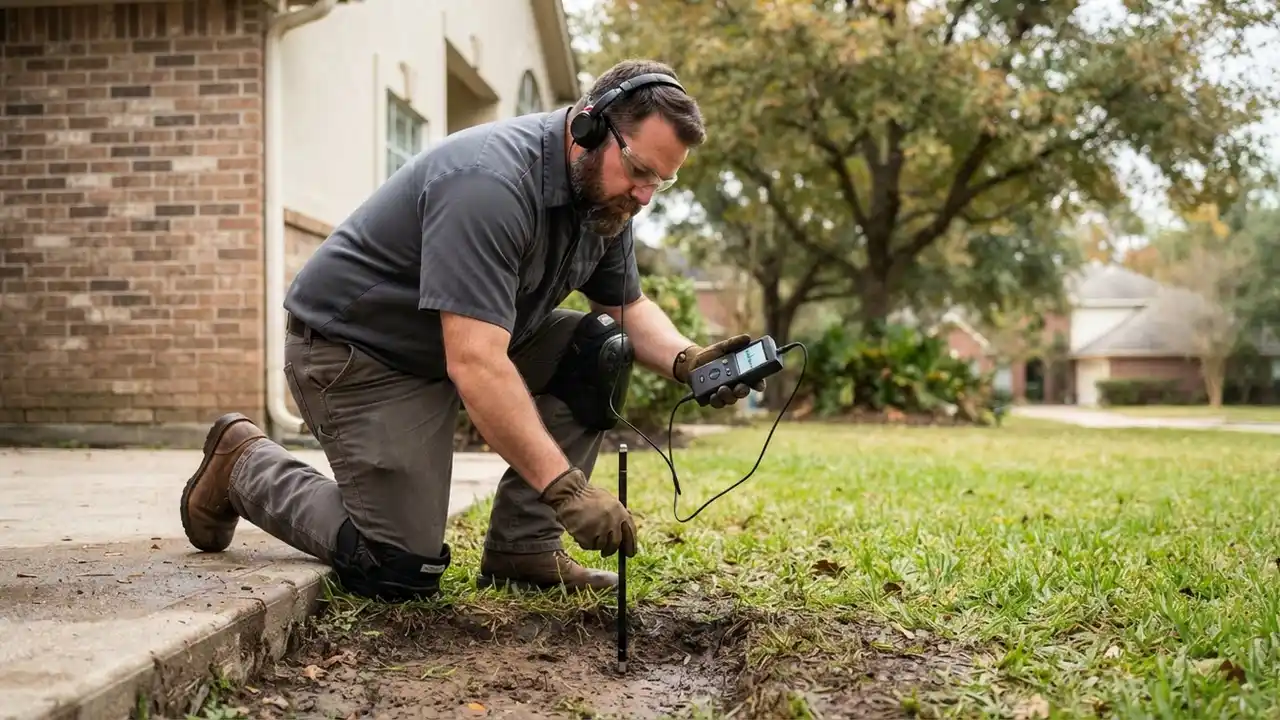 Foundation Leak DetectionA slab leak and a foundation leak often look the same from inside the house. We test both the plumbing and the foundation drainage to tell you which one is failing, so you do not pay for the wrong repair.Explore →
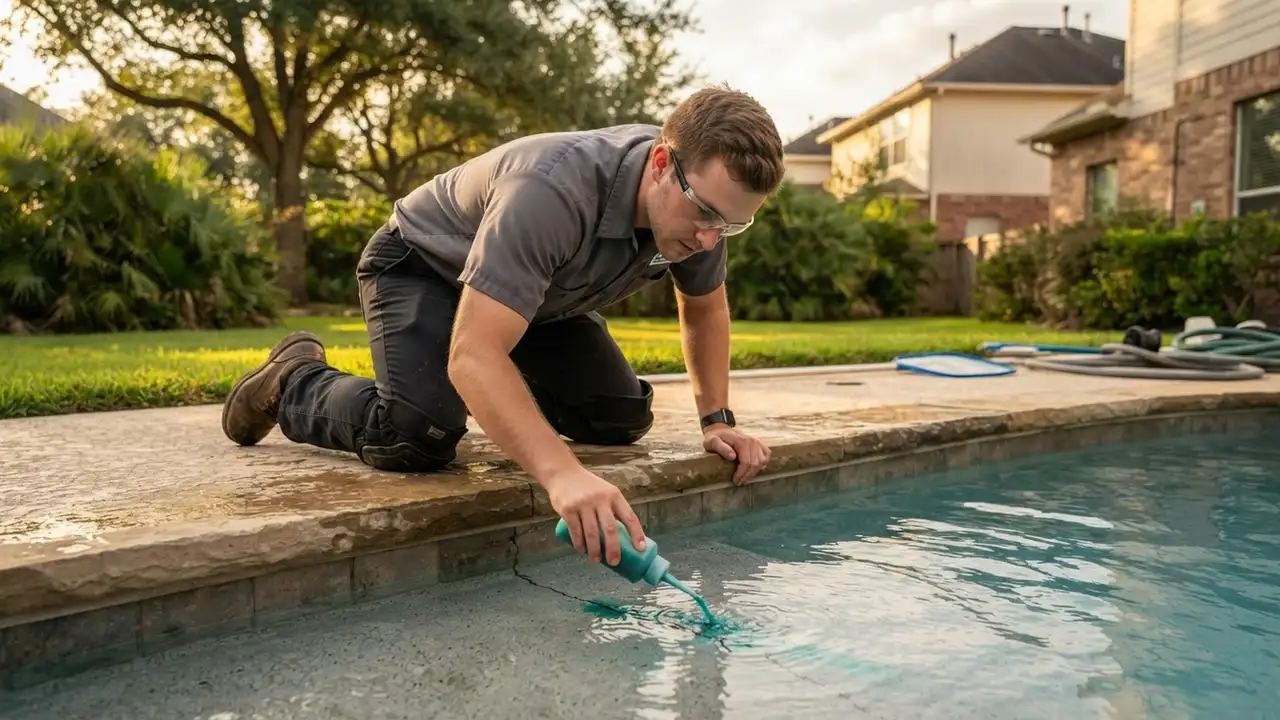 Pool Leak DetectionPool leaks and slab leaks both drive up water bills. We pressure-test the pool plumbing and the house supply lines in the same visit, which saves you a second call-out and isolates the real source.Explore →
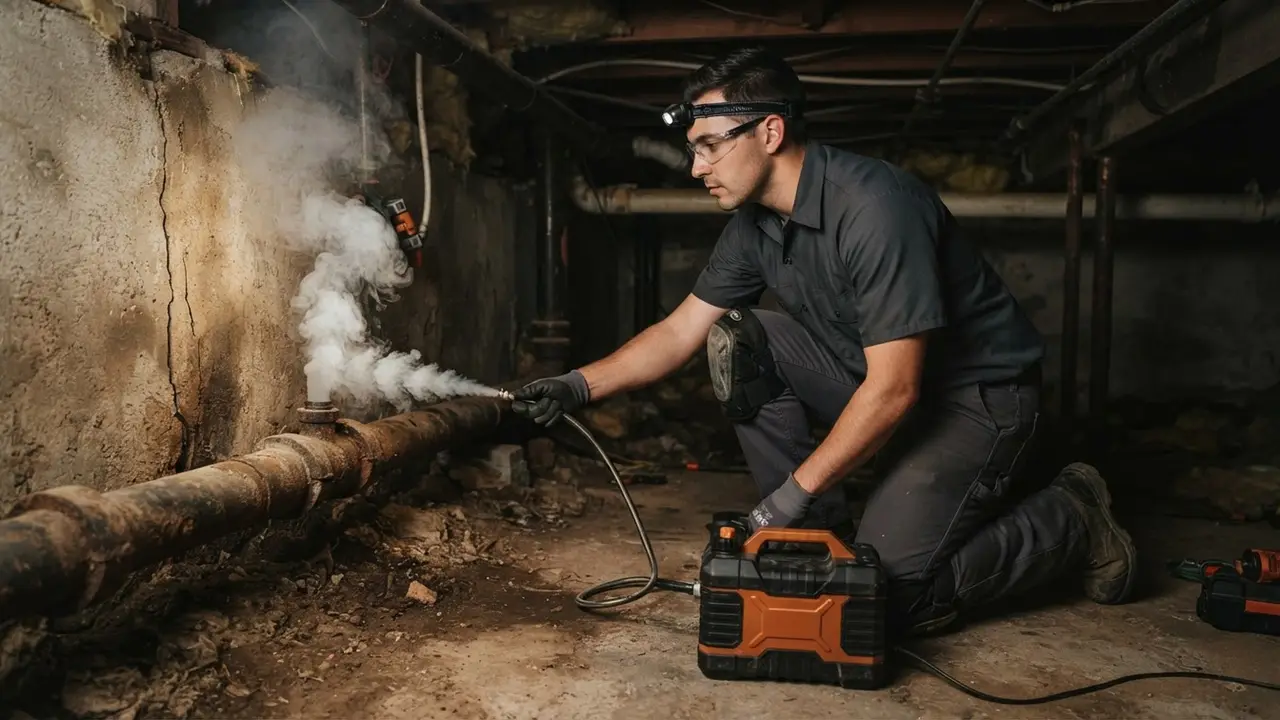 Sewer Line Leak DetectionA broken sewer line under the slab can mimic a slab leak with wet floors and a musty smell. We run a pipe inspection camera through the line to rule out sewer damage before we open the slab.Explore →
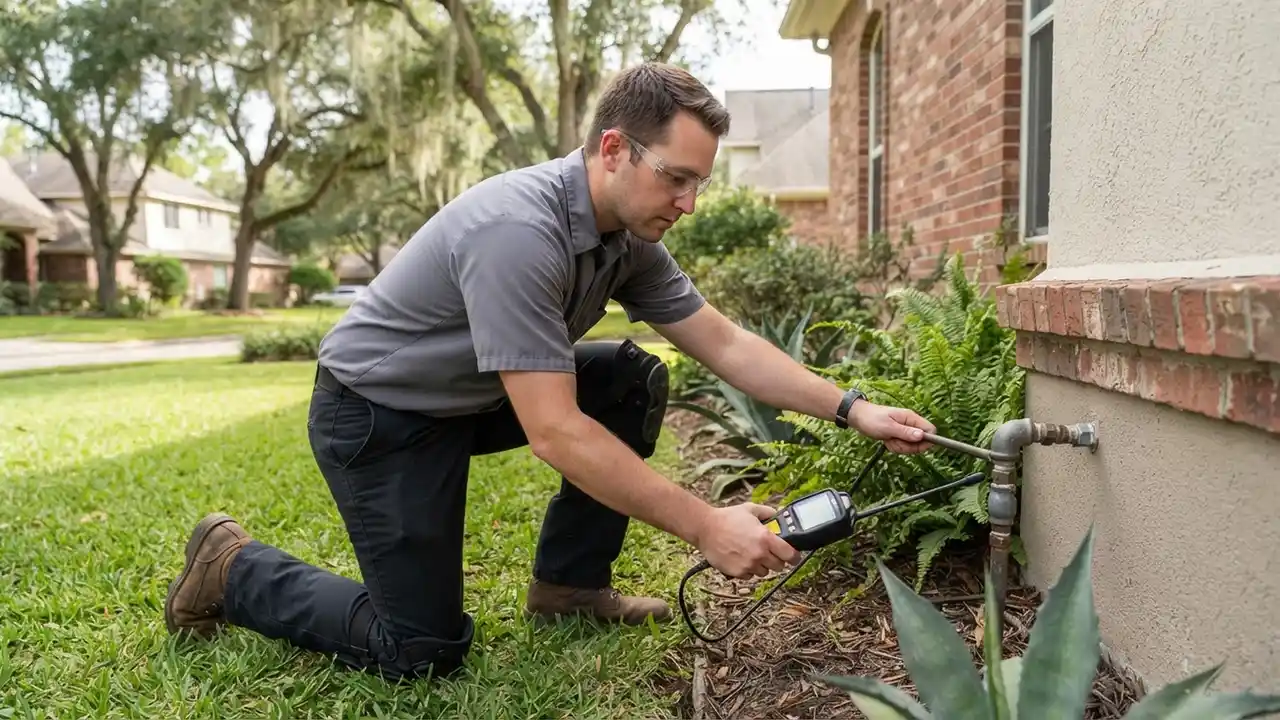 Gas Leak DetectionGas lines run under the slab in many Houston homes. If you smell gas or your meter is ticking with everything off, we use a Sewerin tracer gas detector to pinpoint the leak without digging up the yard.Explore →
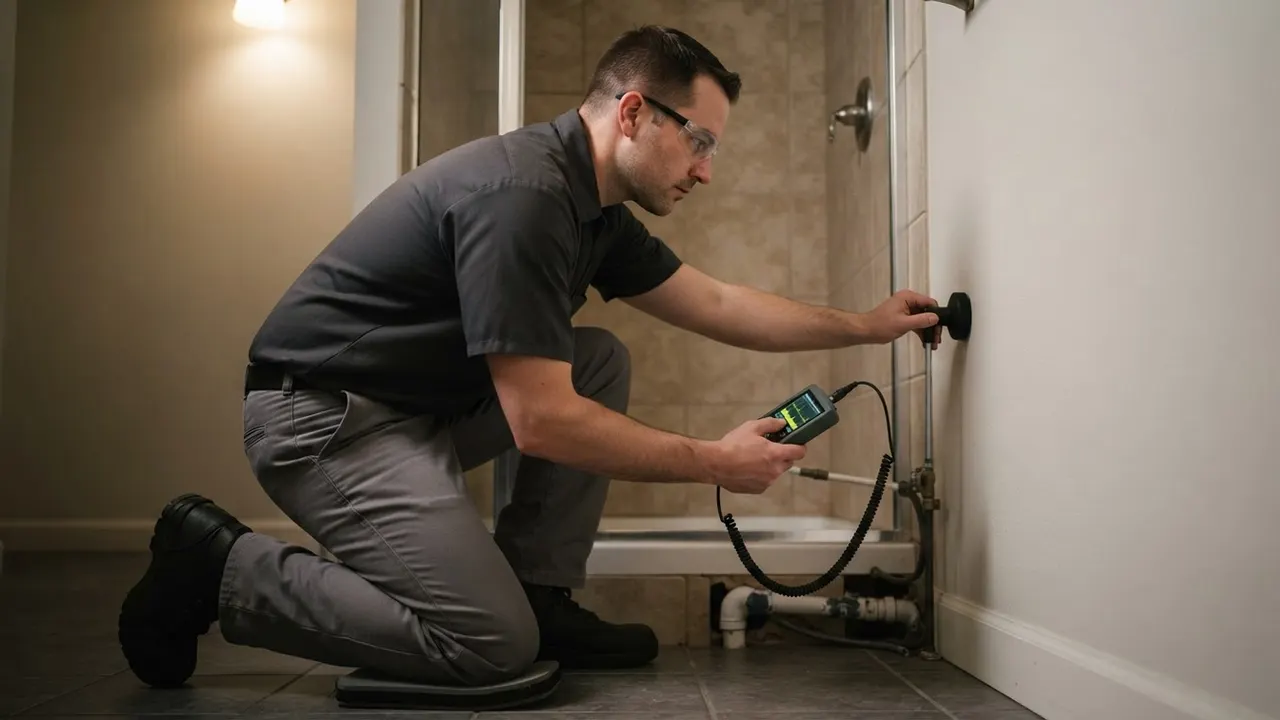 Plumbing Leak DetectionNot every leak is under the slab. We trace leaks in walls, ceilings, and crawl spaces using the same acoustic and thermal tools, so you get an answer regardless of where the water is hiding.Explore →
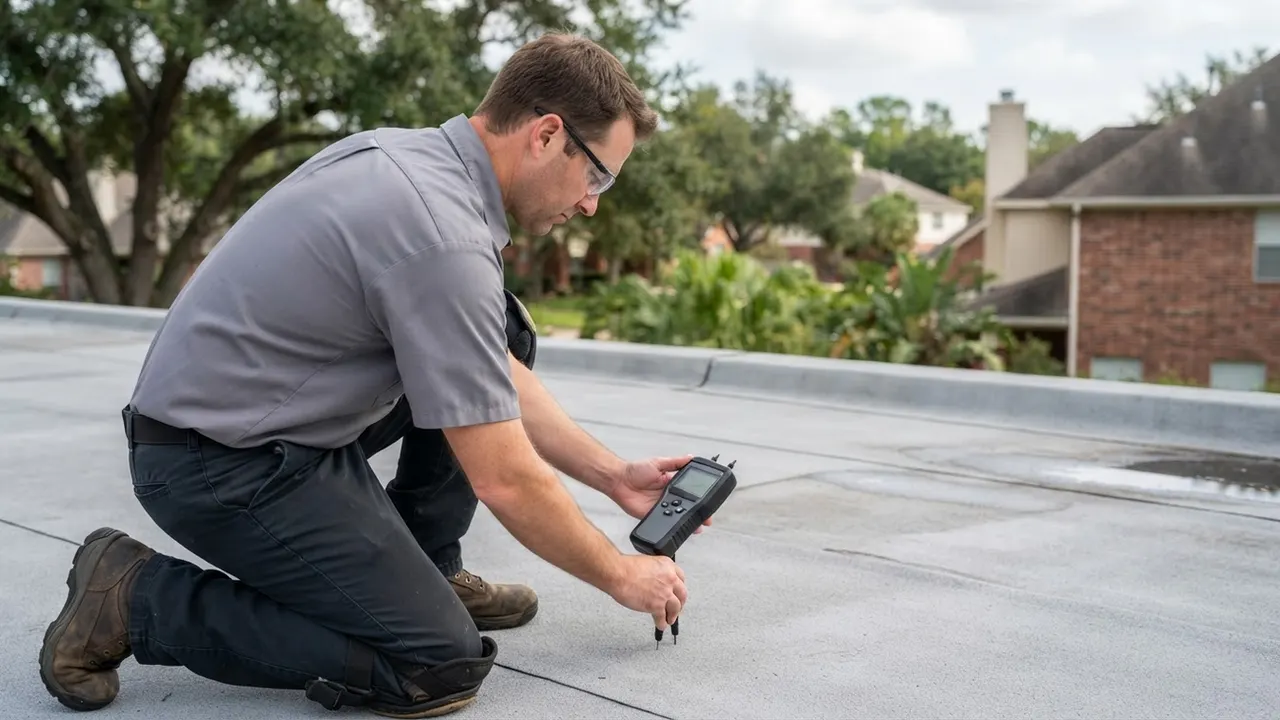 Roof Leak DetectionHouston's spring storms push water through worn flashing and shingles. We use moisture meters and thermal imaging to trace roof leaks to the entry point, which is often 10 feet from where the ceiling stain appears.Explore →
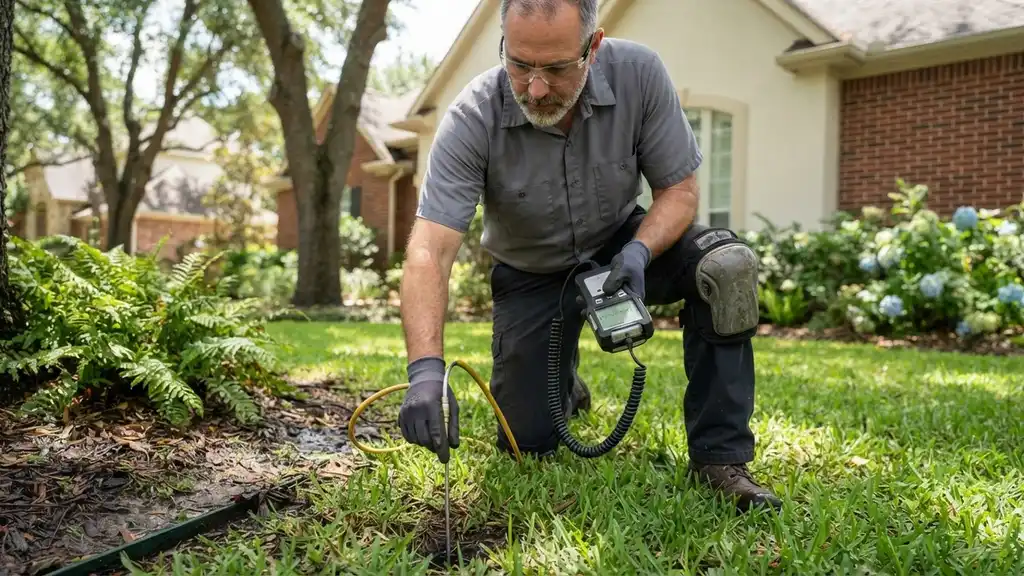 Irrigation System Leak DetectionA broken sprinkler zone can waste 500 gallons a night and look like a slab leak on your water bill. We isolate the irrigation loop from the house supply and pressure-test each zone to find the break.Explore →
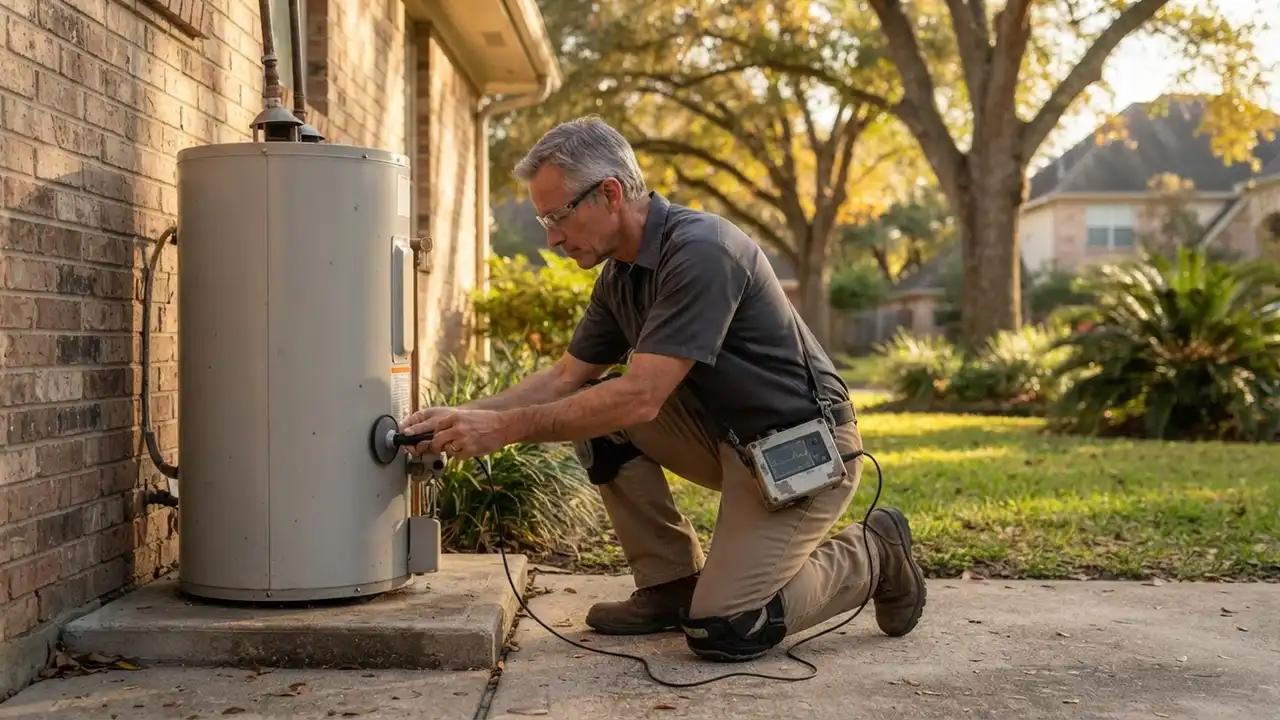 Water Heater Leak DetectionA leaking water heater pan or T&P valve can send water under the slab. We check the tank, fittings, and drain pan first, because fixing a $40 fitting beats opening a slab any day.Explore →
We answer the phone 24/7 and dispatch the nearest truck. Same-day appointments, flat-rate pricing, and a written report you can hand to your insurance adjuster. Call now and we will find the leak before it finds your foundation.
Call Now 8328394984 →Call us at 832-839-4984 or send an email and we will get back to you fast. We answer the phone 24/7 for emergencies and schedule standard detections same day or next day across Houston and Harris County. Tell us what you are seeing and we will give you a flat detection price over the phone.