Pressure gauge will not hold and alarm keeps triggering
We isolate each zone, pressure test with a hydrostatic pump, and find the leaking section. Most pressure-loss calls are resolved in one visit with a fitting or pipe section replacement.
Fire Sprinkler Leak Detection in Houston is what we do every day, from high-rise riser rooms in Downtown to warehouse systems in Greenspoint. If you own or manage a commercial property, a hidden sprinkler leak can soak ceilings, trip alarms, and rack up water bills. Our licensed technicians use acoustic listening devices and thermal imaging cameras to pinpoint the exact failure point without tearing your building apart. We serve Houston, TX and surrounding Harris County communities with same-day emergency response.
Tell us what is happening. Our local team will confirm your visit shortly.
Call Now 8328394984 → No spam. No obligation. Just practical help.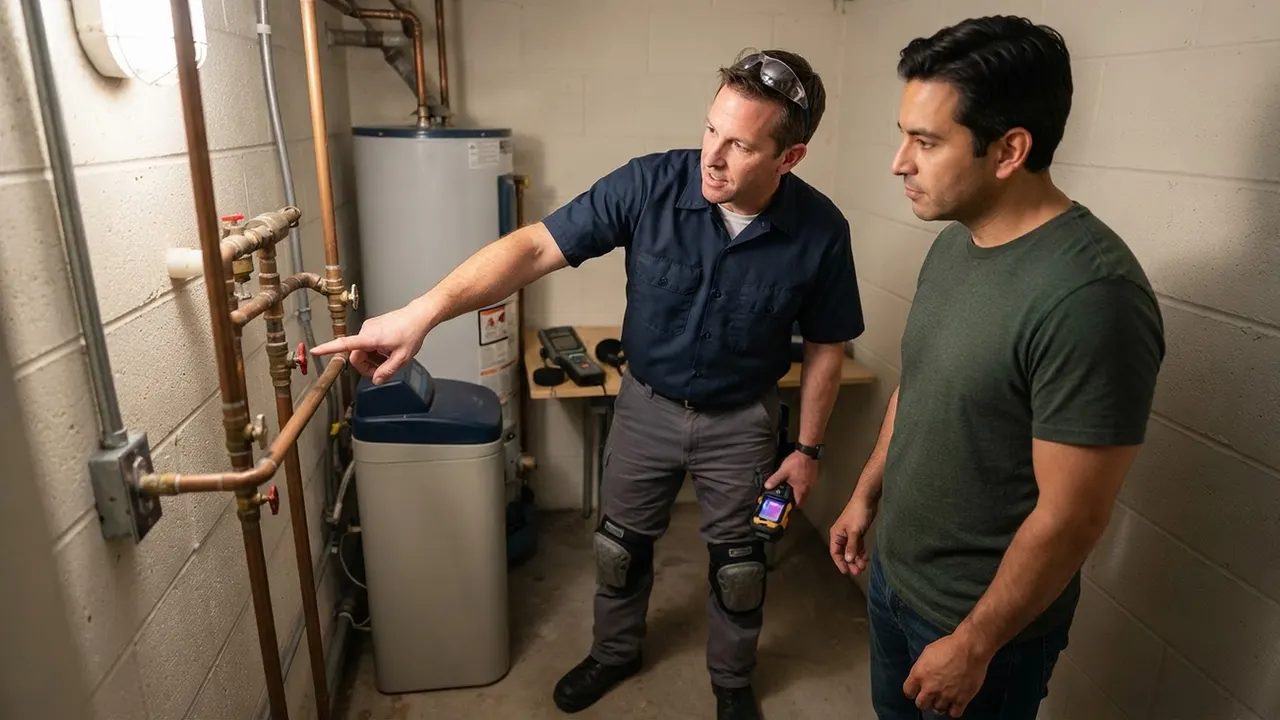
Fire Sprinkler Leak Detection in Houston is the process of finding water loss inside a pressurized sprinkler system before it damages your building. We isolate zones, pressurize the line with a hydrostatic test pump, and watch for pressure decay. Then we sweep the piping with an acoustic listening device and a thermal imaging camera to hear and see where water is escaping. We also use a tracer gas detector on concealed runs and a moisture meter on walls and ceilings. The goal is simple: find the leak, mark it, and fix it without guesswork.
Houston buildings take a beating from heat, humidity, and shifting clay soil. Sprinkler lines that run through attics and uninsulated risers expand and contract daily, which loosens pipe fittings and causes pinhole leaks. In older Downtown and Midtown buildings, we often find corroded pipes behind finished ceilings. In newer construction, we see PEX tubing and copper pipe that was over-pressurized during installation. If you need fire sprinkler leak repair Houston TX, we can usually locate the failure in under two hours and give you a flat repair price before we cut anything open.
Every call includes zone isolation, pressure testing, and non-destructive pinpointing. We document what we find and give you a flat repair price before we cut. Here is what is covered on a standard visit.
We close control valves to isolate each sprinkler zone and pressurize it with a hydrostatic test pump. A pressure testing gauge records the decay rate. This tells us which zone is leaking and how fast, which narrows the search area before we use any other tool.
We sweep the suspect zone with an acoustic listening device and a thermal imaging camera. The acoustic tool hears water escaping under pressure; the thermal camera shows temperature differences where moisture is present. Together they pinpoint the leak within a few inches.
For underground or slab-embedded sprinkler runs, we introduce a tracer gas and sweep with a detector. This finds leaks that acoustic tools cannot reach. It is the same method we use for underground leak detection on water mains.
We use a moisture meter to map how far water has traveled from the leak. You get a written report with the zone, the pressure test result, and photos of the failure point. This documentation supports insurance claims and code compliance records.
Once we know the exact failure, we quote the repair in writing. The quote covers materials, labor, and a post-repair pressure test. You approve it before we open any wall. No surprise charges after the work is done.
Call 832-839-4984 and describe what you are seeing: wet ceiling tiles, a dripping riser, a pressure gauge that will not hold, or a water bill that jumped. We ask three or four questions to narrow the zone, then dispatch a technician. Most Houston calls get a same-day window.
Our technician walks the system with you. We check the main drain, the riser, the inspector test valve, and any visible piping. We note the building type, pipe material, and age. This takes 20 to 30 minutes and tells us whether the leak is in the main, a branch line, or a concealed run.
We close control valves to isolate sections of the system, then pressurize each zone with a hydrostatic test pump. A pressure testing gauge shows which zone loses pressure and how fast. A slow drop points to a pinhole leak; a fast drop means a broken fitting or a failed joint.
Once we know the zone, we use an acoustic listening device to hear the leak through concrete and drywall. A thermal imaging camera shows temperature differences where water is moving. On concealed lines, we introduce a tracer gas and sweep with a detector. We mark the exact spot with tape before any cutting.
We cut the smallest opening possible, replace the failed section with copper pipe or PEX tubing, and seal the joint with pipe sealant and Teflon tape. After the repair cures, we re-pressurize the zone and hold it at 200 psi for one hour. If it holds, we document the result and clean up.
Purpose-built equipment, used by trained technicians — so the job is done accurately the first time.
Hears the sound of pressurized water escaping a pipe through concrete, drywall, and soil. It is our first tool on most sprinkler leak calls.
Shows temperature differences caused by escaping water. We use it to trace moisture behind walls and ceilings without demolition.
Detects a harmless gas mixture introduced into a sprinkler line. It pinpoints underground and slab-embedded leaks that acoustic tools cannot reach.
Pressurizes isolated sprinkler zones to a set pressure. We use it with a pressure testing gauge to measure decay and confirm the repair.
Lets us see inside sprinkler piping and drain lines. We use it to check for corrosion, scale, and blockages that could cause future leaks.
Measures moisture content in drywall, wood, and concrete. It helps us map how far water has traveled from the leak point.
Senses moisture and pressure changes in concealed spaces. We use it as a secondary check when acoustic signals are weak.
A 12-story office building had a pressure gauge dropping 10 psi per hour. The alarm company called twice in one week. No visible water anywhere.
We isolated the zone, used acoustic listening, and found a pinhole leak in a riser closet on floor seven. We replaced the section with copper pipe and held 200 psi for one hour. No alarms since.
A warehouse in the Energy Corridor had a water bill that doubled. The sprinkler main ran under a parking lot and no one wanted to excavate.
We used tracer gas and acoustic detection to pinpoint the leak within three feet. We repaired the line with a new section of PVC pipe and re-tested to 200 psi. The water bill returned to normal.
A homeowner saw water stains on the ceiling below an attic sprinkler line. The system was losing pressure and the alarm panel showed a trouble code.
We used a thermal imaging camera to find a cracked fitting behind the laundry room wall. One small access hole, a new fitting, and a pressure test. The ceiling dried out and the system held pressure.
Sprinkler leaks show up in different ways depending on the building. Here are the most common problems we fix for Houston property owners and managers.
Ask a pro →We isolate each zone, pressure test with a hydrostatic pump, and find the leaking section. Most pressure-loss calls are resolved in one visit with a fitting or pipe section replacement.
We use thermal imaging and acoustic listening to trace the moisture back to the sprinkler line. We mark the leak, cut one small access hole, and repair the pipe.
We use tracer gas and acoustic detection to find underground leaks without excavation. Once located, we repair the line and re-test to 200 psi.
We inspect accessible piping, pressure test each zone, and replace corroded sections with copper pipe or PEX tubing. We also check for pinhole leaks that are common in Houston's heat cycles.
$250 - $1,200 depending on system size and leak location
Typical 2026 pricing for fire sprinkler leak detection in Houston runs $250 to $650 for residential and small commercial systems. Large commercial systems with multiple zones can reach $1,200. The price covers zone isolation, pressure testing, and non-destructive pinpointing. Repair costs are quoted separately once we know the failure point. We give you a flat price before we cut, so you are never surprised by the bill. Affordable fire sprinkler Leak Detection Houston TX starts with a clear number.
Finding the leak fast prevents water damage, false alarms, and code violations. The detection cost is a fraction of what a flooded floor or a failed inspection costs.
A single-zone residential system takes less time to isolate and test than a 10-zone commercial building. More zones mean more valves to close and more pressure tests to run, which adds labor.
An accessible leak in a riser closet is faster to find than one buried under a slab or behind finished drywall. Underground leaks require tracer gas and take longer to pinpoint.
Copper pipe and PEX tubing are common and easy to repair. Older galvanized pipe may need a larger section replaced, which adds material cost and labor time.
High-rises and hospitals require coordination with building engineers and may need after-hours work. That scheduling adds to the cost but keeps tenants and patients undisturbed.
“We had a pressure gauge dropping in a 12-story building and no visible water. Leak Detection The Heights isolated the zone, used acoustic gear, and found a pinhole leak in a riser closet on floor seven. They repaired it the same day and gave us a pressure test record for our insurance file. No tenant complaints.”
Marcus T.Property Manager, Downtown Houston
✓ Verified“Our home sprinkler system started losing pressure and the alarm company called twice. These guys came out, used a thermal camera, and found a cracked fitting behind the laundry room wall. One small hole, fixed in two hours. The pressure has held for months.”
Sandra R.Homeowner, The Heights
✓ Verified“A warehouse sprinkler main was leaking underground and we were about to dig up the parking lot. They used tracer gas and pinpointed it within three feet. Saved us thousands in excavation. Professional, clean, and they explained every step.”
Danny K.Facilities Director, Energy Corridor
✓ VerifiedMost residential and small commercial sprinkler leak detection jobs in Houston run $250 to $650 in 2026. Large commercial systems with multiple zones can reach $1,200 because of the extra isolation and testing time. The price includes zone isolation, pressure testing, and acoustic or thermal pinpointing. Repair costs are quoted separately once we know the exact failure point.
The three clearest signs are a pressure gauge that will not hold, water stains on ceilings or walls near sprinkler lines, and a water bill that jumped without a change in usage. You may also hear a faint hiss in a riser room or see corrosion at a pipe fitting. If your monitoring company calls about a low-pressure supervisory alarm, that is a leak until proven otherwise.
A licensed plumbing contractor with sprinkler system experience fixes them. Leak Detection The Heights holds a Texas State Board of Plumbing Examiners license and has handled Houston sprinkler leaks since 2013. We handle detection, repair, and pressure testing in one visit. We do not sub the work out to another company.
Most commercial property policies cover sudden sprinkler leaks, but not long-term seepage you could have caught earlier. Your carrier will want documentation showing the leak was found and repaired to code. We provide a written pressure test record and photos of the repair. That paperwork supports your claim and shows the system was restored properly.
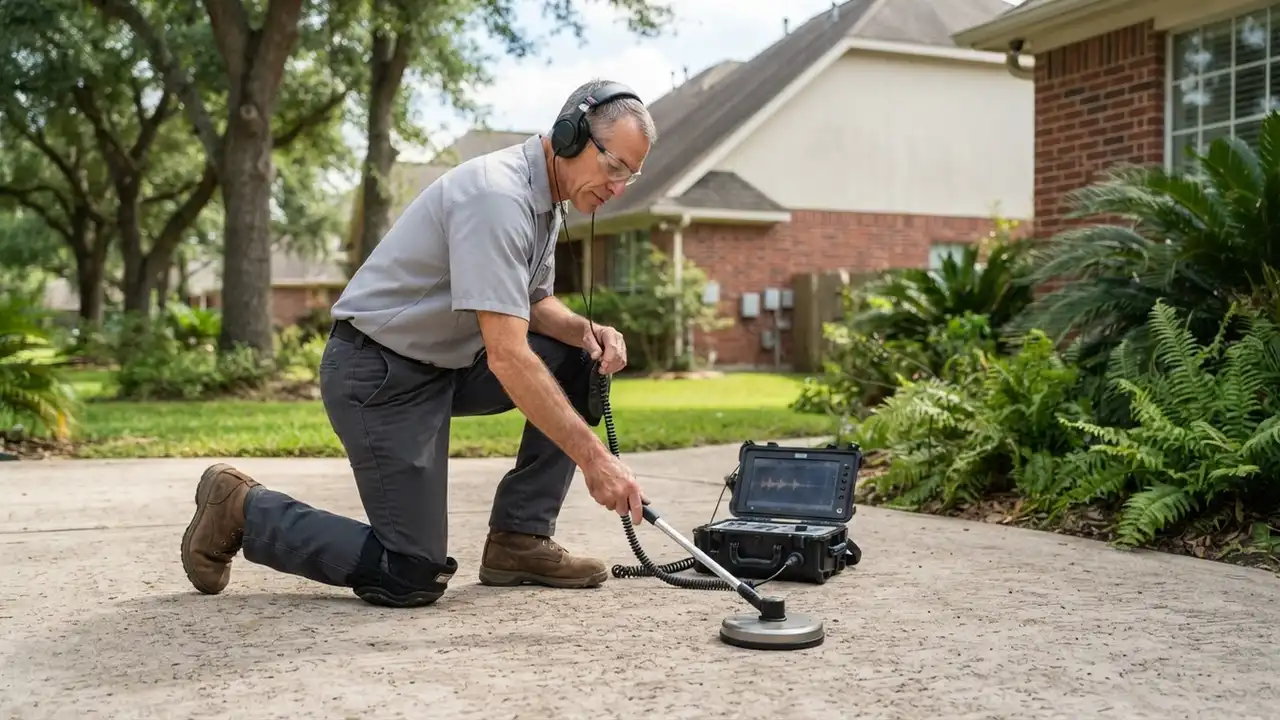 Slab Leak DetectionSprinkler lines sometimes run under slabs in Houston commercial buildings. If we suspect the leak is below grade, we use the same acoustic and thermal tools to confirm a slab leak before we break concrete.Explore →
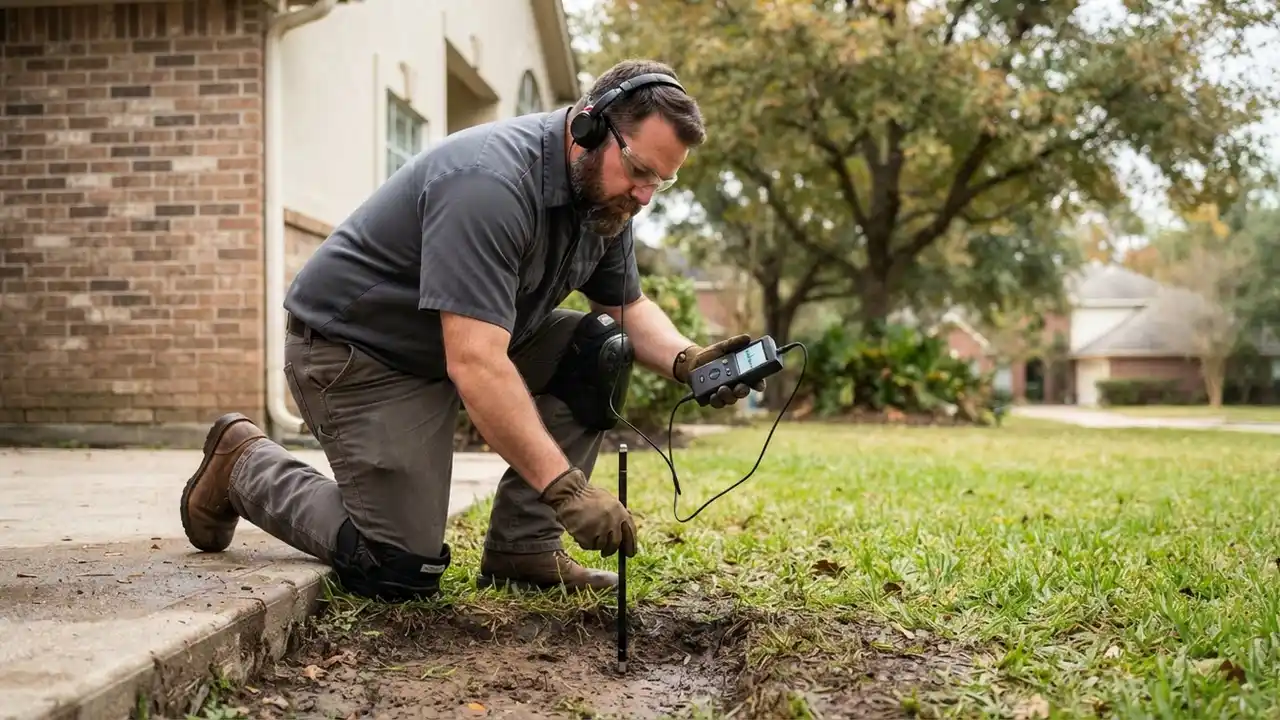 Foundation Leak DetectionA sprinkler leak that saturates soil around a foundation can cause movement. We check for foundation movement when a leak runs near the perimeter and coordinate with foundation specialists if needed.Explore →
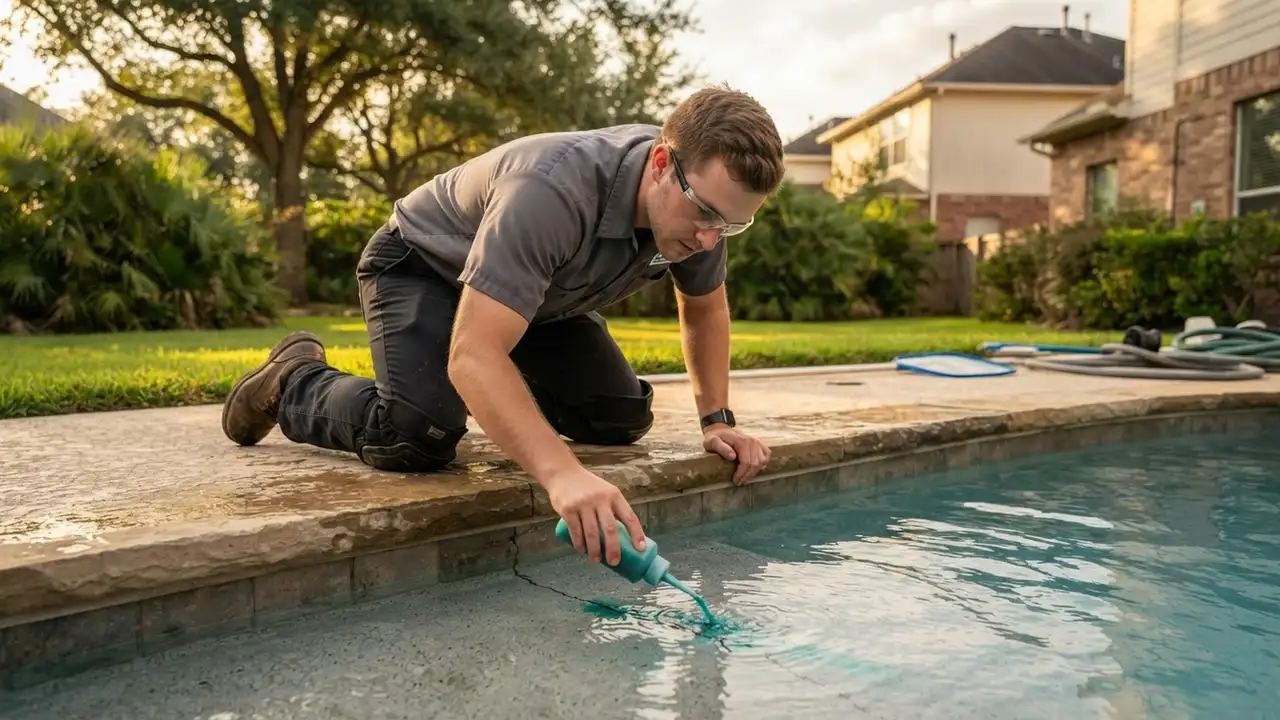 Pool Leak DetectionCommercial properties with pools and sprinkler systems share water mains and shutoffs. We can isolate both systems in one visit so you know which line is losing water and which repair to prioritize.Explore →
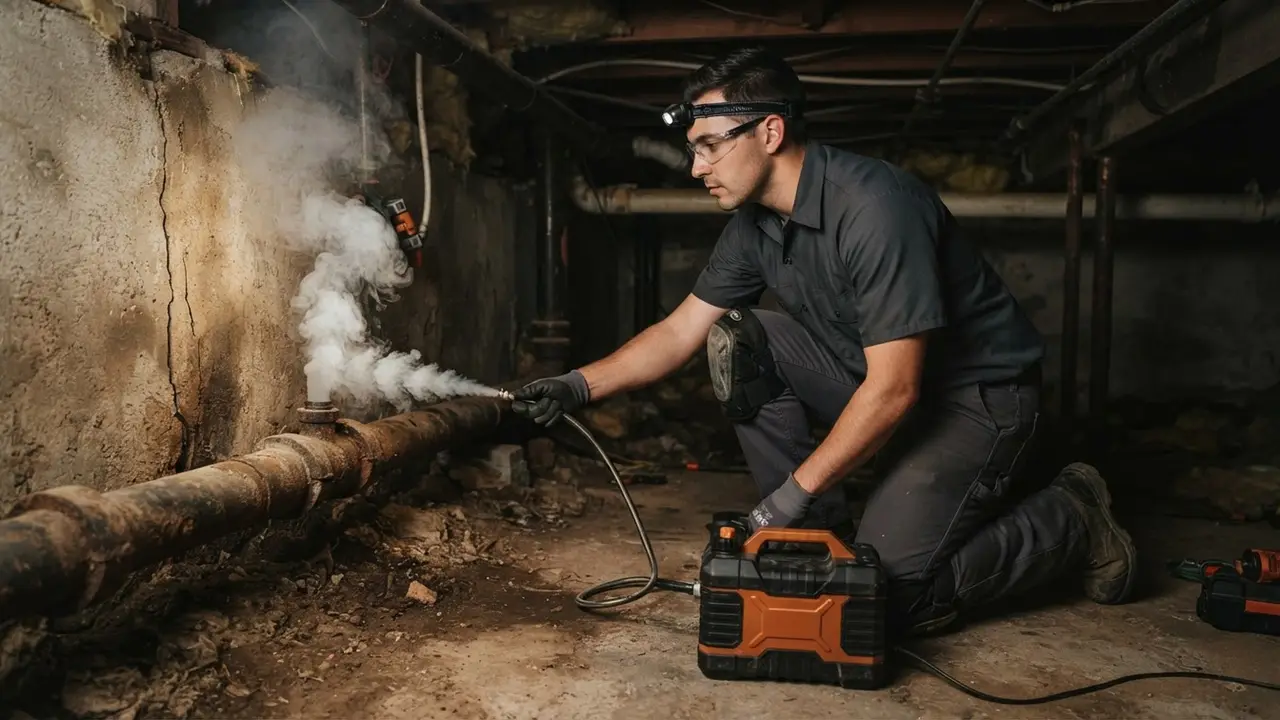 Sewer Line Leak DetectionSprinkler leaks and sewer line backup problems can both show up as wet floors. We run a pipe inspection camera to rule out sewer issues before we assume the sprinkler line is the source.Explore →
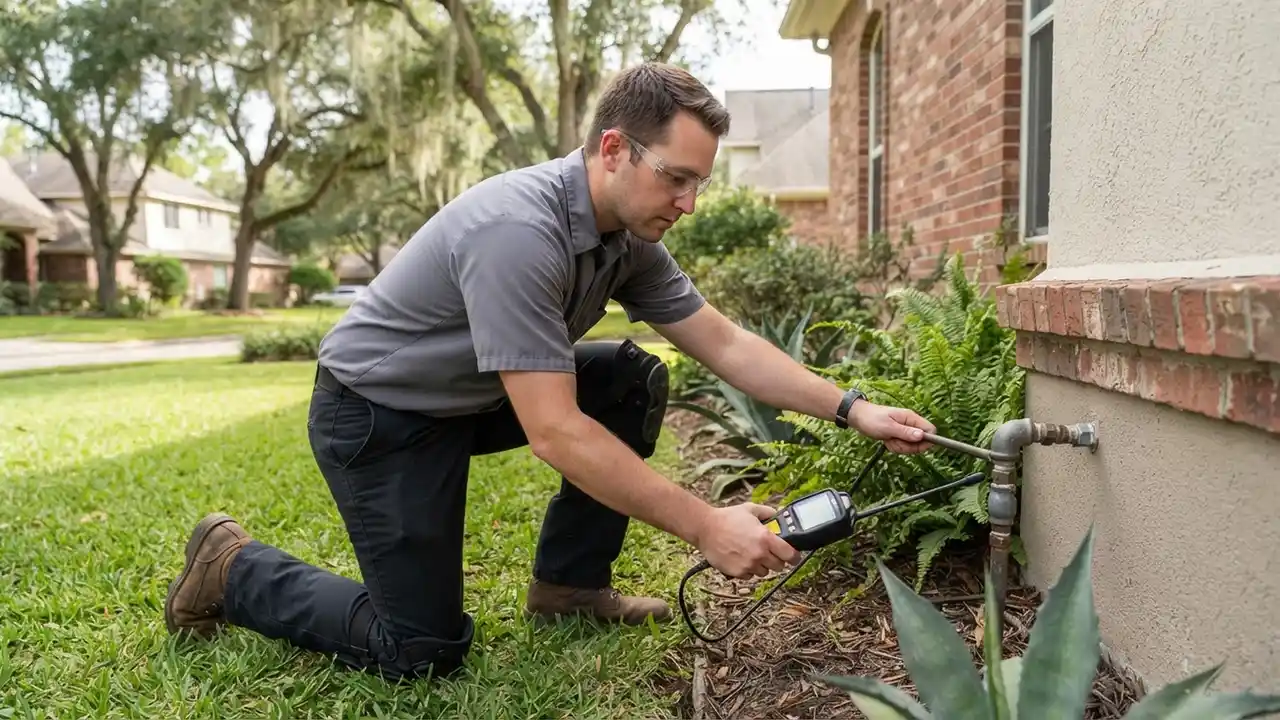 Gas Leak DetectionFire sprinkler rooms often house gas lines and regulators. If you smell gas near a riser room, we use a tracer gas detector and coordinate with the gas utility before touching sprinkler piping.Explore →
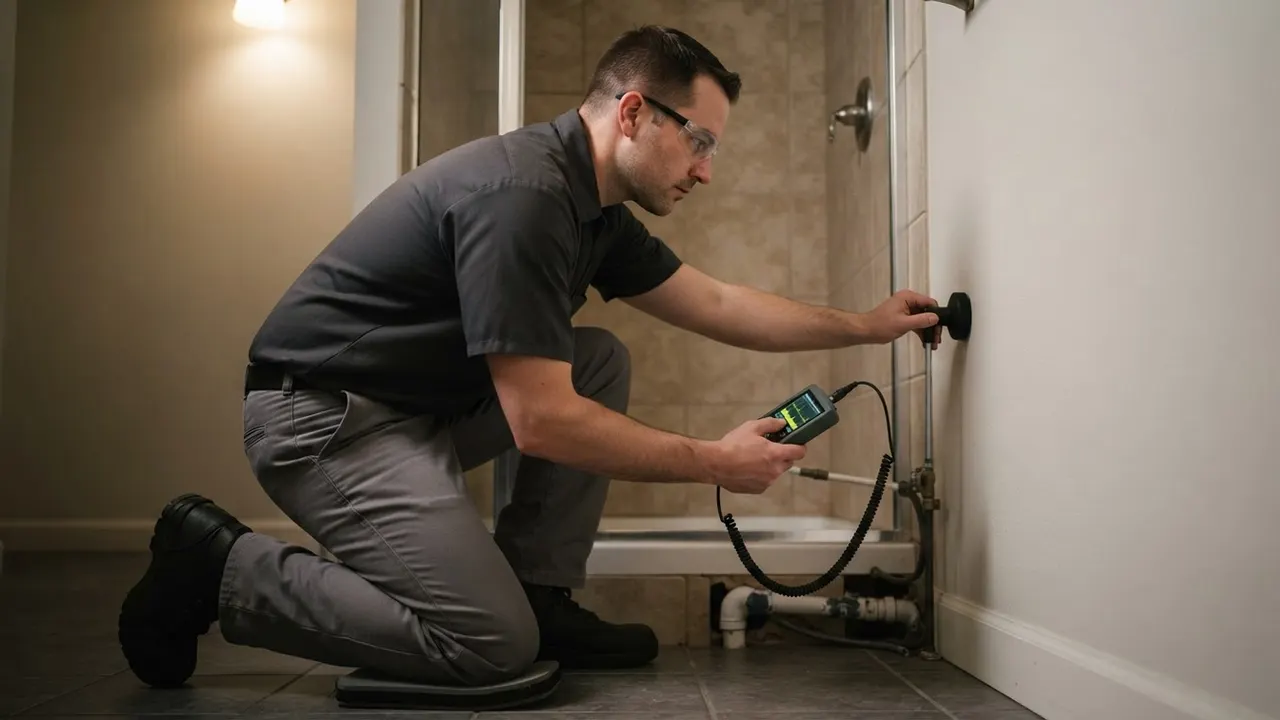 Plumbing Leak DetectionA sprinkler leak and a domestic water leak look similar on a water bill. We pressure test both systems separately so you are not paying to repair the wrong line.Explore →
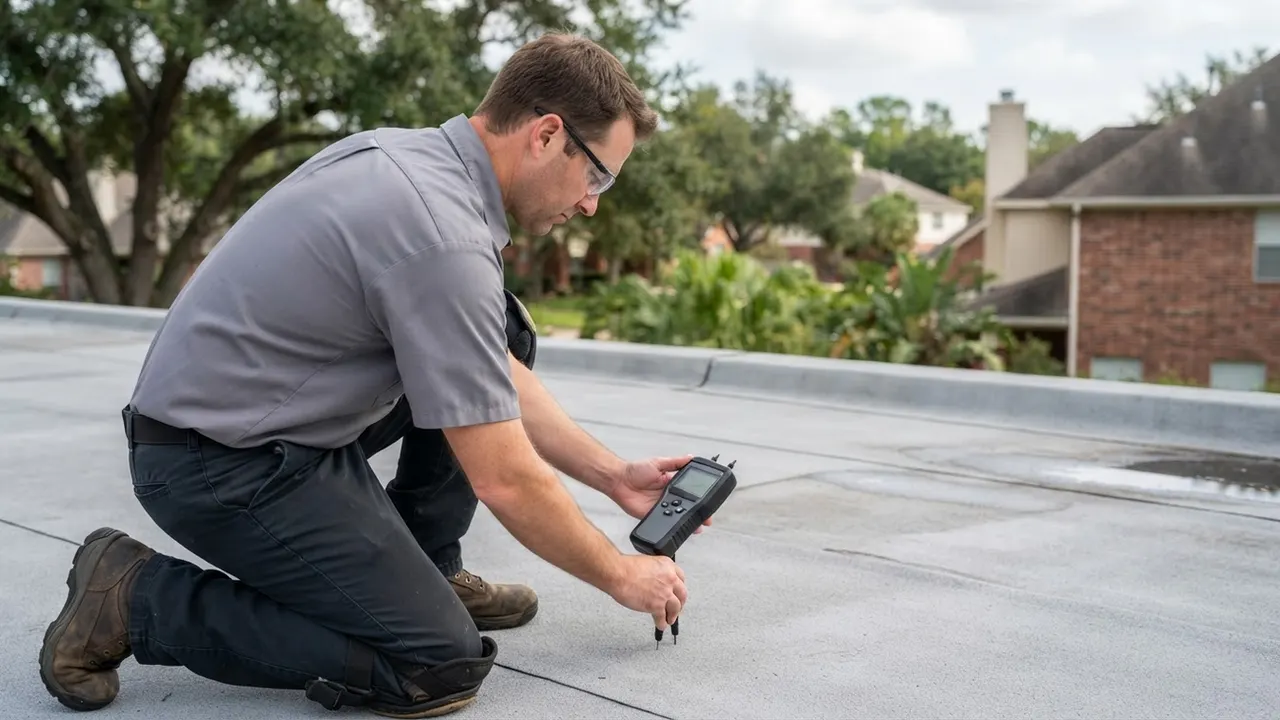 Roof Leak DetectionRoof leaks in Houston often drip onto sprinkler piping and mimic a sprinkler failure. We check the roof assembly and ceiling cavity before we cut into a sprinkler line.Explore →
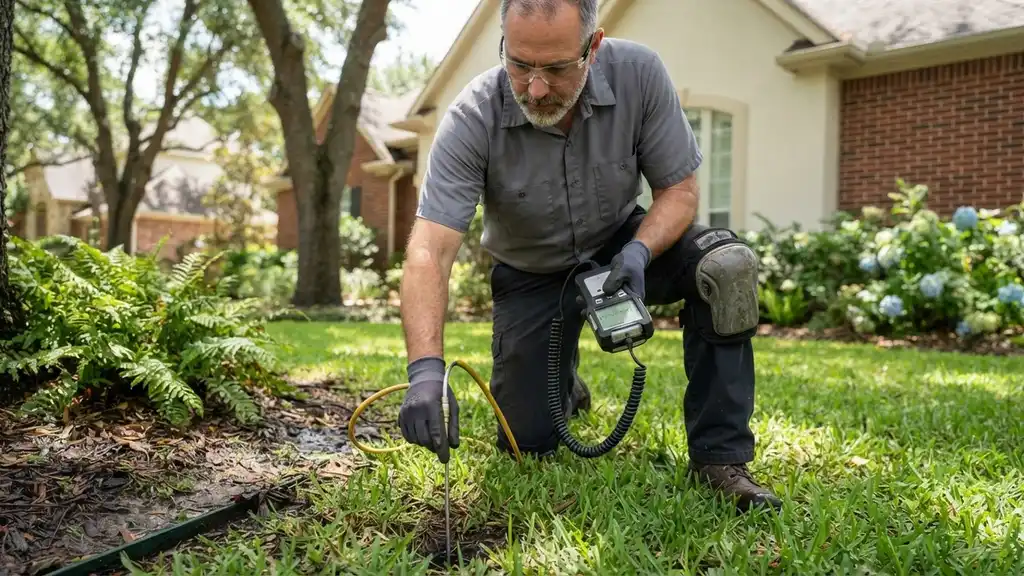 Irrigation System Leak DetectionIrrigation lines and sprinkler mains sometimes share a trench on commercial campuses. We isolate the irrigation zone first to confirm the leak is in the fire system, not the landscaping.Explore →
We are licensed, insured, and bonded in Texas. Same-day service and 24/7 emergency response across Harris County. Call now and we will find the leak, fix it, and test the line before we leave.
Call Now 8328394984 →Call us at 832-839-4984 or send an email and we will get back to you fast. We answer the phone 24/7 for emergencies and schedule standard detections same day or next day across Houston and Harris County. Tell us what you are seeing and we will give you a flat detection price over the phone.