Water bill doubled with no change in use
We test the meter, isolate the main, and find the break with acoustic and thermal tools. Most high-bill calls are resolved in a single visit. You get the location and a repair quote before we leave.
Water Main Leak Detection in Houston means pinpointing the exact break in the line that feeds your home before anyone digs. We handle slab-on-grade homes, older copper mains, and newer PEX runs across Harris County. If your bill jumped and the yard stays wet, call 832-839-4984 and we will trace the line, mark the spot, and quote the repair the same day.
Tell us what is happening. Our local team will confirm your visit shortly.
Call Now 8328394984 → No spam. No obligation. Just practical help.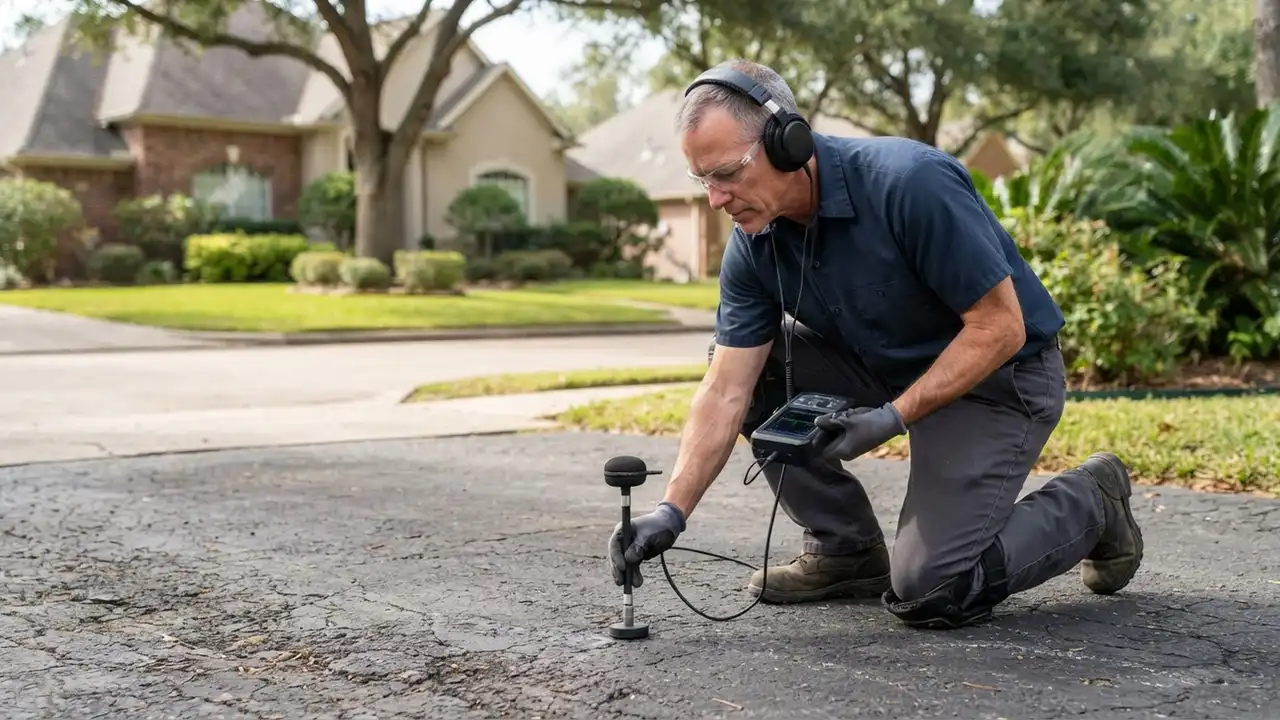
Water Main Leak Detection in Houston is the process of locating a hidden failure in the pressurized line between your meter and your home using acoustic listening devices, thermal imaging cameras, and pressure testing gauges. We isolate the main from the rest of the plumbing, pressurize it, and listen for the signature hiss of water escaping through a pinhole leak, a cracked fitting, or a root-intruded joint. Once we mark the spot, we know whether the break sits under grass, under a driveway, or under the slab.
Houston homeowners call us when the water bill doubles and nothing inside the house is running. Our soil shifts with every wet and dry cycle, and that movement shears copper pipe and pulls apart older PVC pipe fittings. If you need water main leak repair Houston TX, we start with detection, not demolition. We also handle emergency water main leak repair Houston Texas calls when a line lets go at 2 a.m. and water is climbing the foundation.
Every detection visit covers the full diagnostic process from meter to foundation. We test, listen, confirm, and mark the leak. Repair work is quoted separately so you can see the detection cost and the repair cost as two clear numbers.
We shut every fixture, watch the meter, and pressurize the main with a hydrostatic test pump. This confirms the leak is on the supply line and not a running toilet, irrigation zone, or slab leak. It takes about 20 minutes.
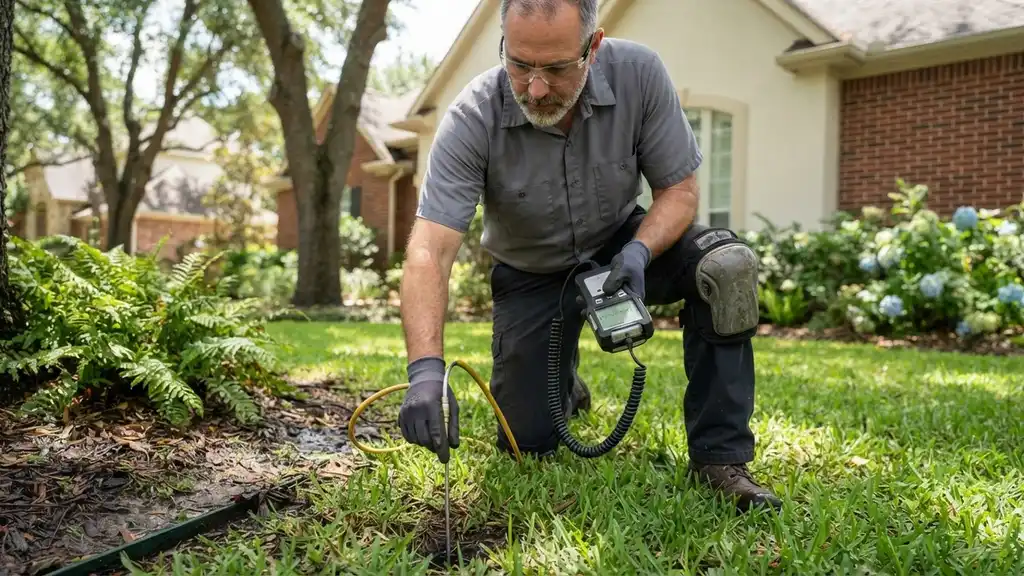
We walk the main line with an acoustic listening device and an electronic leak detector. On a standard residential lot, we can trace the line and narrow the break to within about 12 inches. This is the core of the service.
A FLIR thermal imaging camera shows where water is pooling underground. We cross-check the acoustic hit against the thermal image. When both tools agree, we are confident enough to mark the spot and quote the repair.
We paint the spot, photograph the location, and note the depth and pipe material. You get a written location you can hand to any repair crew. No guesswork, no blind digging, no torn-up yard.
We quote the repair based on pipe material, depth, and surface type. If the line is copper and the break is under grass, the fix is straightforward. If it is under a driveway, we tell you what that adds. You decide who does the work.
We shut every fixture in the house and watch the meter. If the low-flow indicator still turns, the main is losing water. This takes about 10 minutes and confirms the leak is on the supply side, not a running toilet or irrigation zone.
We close the main valve at the house and pressurize the buried line with a hydrostatic test pump. If pressure drops, the break is underground. This step separates a main line leak from a slab leak inside the home.
Using an acoustic listening device and an electronic leak detector, we walk the line and listen for the rush of water through soil. We mark the loudest point with flagging paint. Most lines take 30 to 60 minutes to trace.
A FLIR thermal imaging camera shows the temperature difference where water is pooling underground. We cross-check the acoustic hit against the thermal image. When both agree, we are confident within about 12 inches.
We paint the spot, photograph the location, and hand you a repair quote. You see exactly where the break is and what the fix costs before we cut concrete or dig. No surprises on the invoice.
Purpose-built equipment, used by trained technicians — so the job is done accurately the first time.
Picks up the sound of pressurized water escaping through soil and pipe. We use it to trace the main line and narrow the break to within about 12 inches.
Shows the temperature difference where water is pooling underground. We use it to confirm acoustic hits and trace the line across a yard.
Sniffs for tracer gas escaping from the line when acoustic signals are muddy. Works well on lines under driveways and thick slabs.
Pressurizes the isolated main line to confirm a leak. If the gauge drops, the line is losing water. This separates a main leak from a slab leak.
Runs through drain and sewer lines to check for root intrusion and cracked pipe. We use it when a wet spot could be a drain leak instead of a main leak.
Calibrated gauge that reads line pressure to within a fraction of a PSI. We use it to document the pressure drop and confirm the repair held.
Reads moisture content in drywall, wood, and concrete. We use it to check whether a main leak has already saturated the foundation or a wall cavity.
A 1965 Braeswood home had a water bill that jumped from $90 to $380 in one month. The front yard had a wet strip that never dried. Two plumbers told the owner it was drainage. The meter spun with every fixture off.
We pressure tested the main, found a pinhole leak in the copper line 18 inches deep, and marked it within a foot. The repair crew opened one hole and replaced a corroded elbow. The next bill was $95.
A Meyerland homeowner noticed a crack in the tile and a sticking back door. The water bill was up $150. A foundation company said the slab was moving but could not find the water source. The yard was dry.
We isolated the main from the slab plumbing and found the break under the slab, not in the yard. The repair crew tunneled under the foundation and fixed the line. The foundation stopped moving within two weeks.
A 2018 Cypress home had a meter that spun at night. The builder's plumber had already replaced two fittings under warranty. The third leak showed up at the meter box, and the builder would not cover it.
We traced the PEX line, found the break at a fitting 14 inches from the meter, and marked it. The homeowner hired a licensed plumber to replace the fitting and two others nearby. The meter stopped spinning that night.
A main line leak does not fix itself. It gets worse, costs more, and damages more the longer it runs. Here are the problems we see most often and how we solve them.
Ask a pro →We test the meter, isolate the main, and find the break with acoustic and thermal tools. Most high-bill calls are resolved in a single visit. You get the location and a repair quote before we leave.
We trace the line and mark the leak within about a foot. The repair crew opens one small hole instead of trenching the whole yard. Most yard leaks are fixed the same day we mark them.
We isolate the main from the house and test each section. If the main holds pressure, we check irrigation, fixtures, and slab plumbing. You get a clear answer about which system is losing water.
We find the main leak before the foundation damage gets worse. We mark the break and recommend a repair crew. Stopping the water early keeps foundation repair costs in the hundreds instead of the thousands.
$250 - $450 for most residential detection jobs; commercial and emergency calls quoted separately
Detection pricing in 2026 runs $250 to $450 for most residential main lines. The price depends on line length, surface type, and whether we need tracer gas or a pipe inspection camera. We credit the detection fee toward the repair if you hire us for the work. That keeps affordable water main Leak Detection Houston TX pricing honest and predictable. You get a written quote before we start, and the repair quote is separate so you can compare.
A main line leak wastes 10,000 gallons a month and can crack a foundation. Spending $250 to $450 on detection keeps the repair to one small hole instead of a trench across the yard. That is the difference between a $600 fix and a $6,000 excavation.
A 60-foot main under grass is faster to trace than a 200-foot commercial line under asphalt. Depth matters too. A line 18 inches down gives a clearer acoustic signal than one 4 feet down.
Grass and dirt are easy. Concrete driveways, patios, and slabs muffle sound and require thermal imaging or tracer gas. Those tools add time and cost to the detection.
Copper and PVC pipe transmit sound differently. PEX tubing absorbs sound, so we rely more on pressure testing and thermal imaging. Knowing the material before we start keeps the quote accurate.
Fences, sheds, and landscaping slow the trace. If we have to move a shed or work around a pool deck, the job takes longer. We tell you upfront if access will affect the price.
“My water bill went from $80 to $340 in one month. Leak Detection The Heights came out, tested the meter, and found the break under my front yard in about 40 minutes. They marked it with paint and told me exactly what the repair would cost. The repair crew opened one hole and fixed it. No more mystery water bill.”
Marcus T.Homeowner, Braeswood
✓ Verified“We had a wet spot in the yard for weeks and two plumbers told us it was just drainage. These guys pressure tested the main and found a pinhole leak in the copper line. They used a thermal camera to confirm it. The detection fee was $300 and they credited it toward the repair. Honest work.”
Angela R.Homeowner, The Heights
✓ Verified“I manage six rental houses and one had a main line leak that kept flooding the side yard. They came out same day, traced the line, and marked the break within a foot. The repair was done the next morning. I have used them on three more properties since. They know what they are doing.”
David K.Property Manager, Meyerland
✓ VerifiedMost residential detection jobs run $250 to $450 in 2026, depending on line length and whether we need to trace under a slab or driveway. That fee covers the meter test, acoustic listening, thermal confirmation, and marking the leak. If you hire us for the repair, we credit the detection fee toward the work.
The three signs are a water bill that jumps 30 percent or more with no change in use, a meter that keeps spinning with every fixture off, and a wet or unusually green strip in the yard. If you hear running water at night when nothing is on, that is a main line leak. Call us and we will confirm it in about 20 minutes.
A state-licensed plumbing contractor handles the repair, and we handle the detection that tells them exactly where to dig. We work with several licensed repair crews across Harris County and can recommend one, or you can use your own. We mark the spot, photograph it, and hand over the location.
The homeowner owns the line from the meter to the house, so that section is your responsibility. The city owns the meter and the line on the street side. If the leak is between the meter and your foundation, it is on you. We can tell you which side of the meter the break sits on during the first visit.
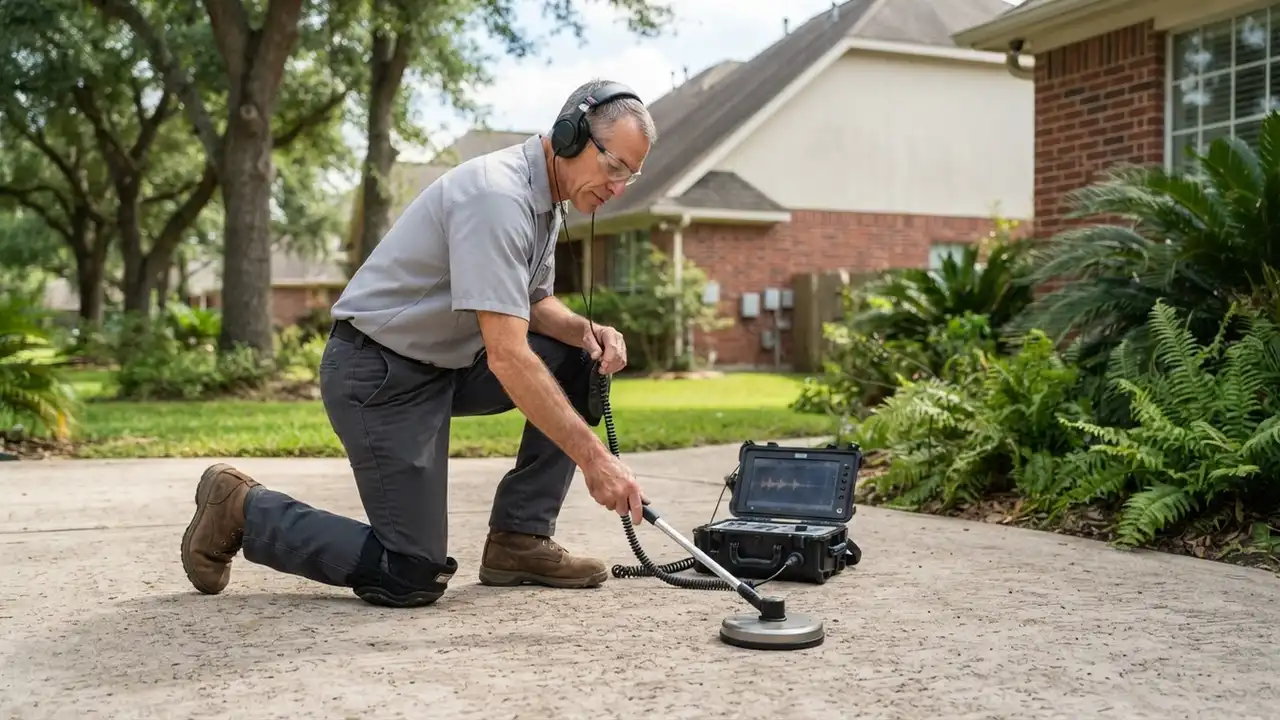 Slab Leak DetectionA main line leak under a slab and a slab leak look identical on your bill. We isolate the main first, then use acoustic and thermal gear to confirm whether the break is in the supply line or the slab plumbing itself. Getting this right saves you from cutting the wrong concrete.Explore →
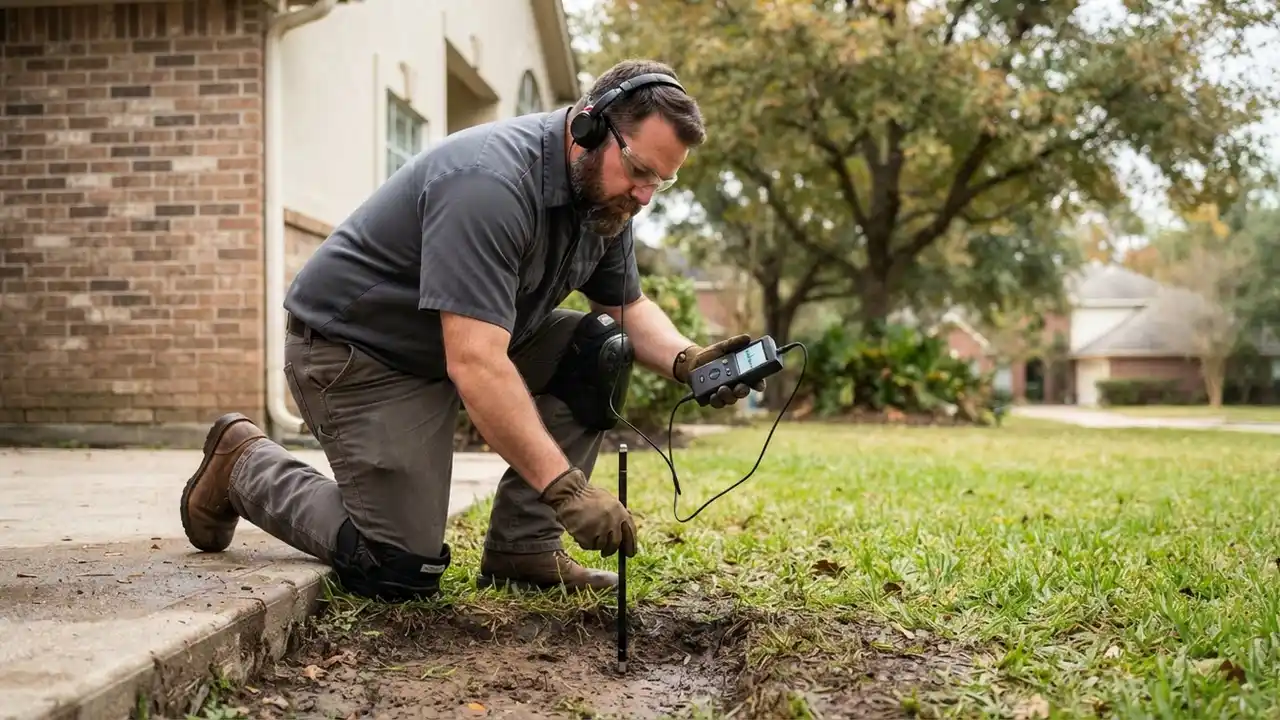 Foundation Leak DetectionWater from a failed main line saturates the soil under your foundation and causes movement. We detect the main leak and mark it, then check whether the foundation has already shifted. Catching it early keeps repair costs in the hundreds instead of the thousands.Explore →
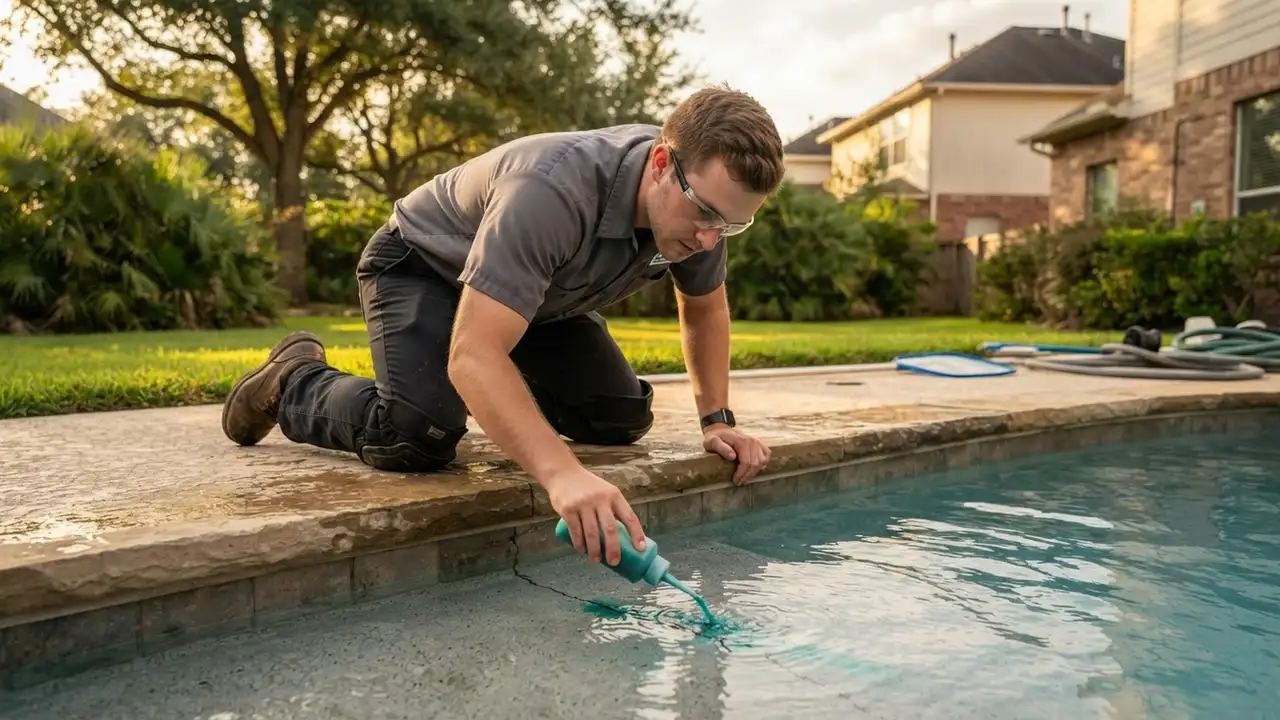 Pool Leak DetectionPool owners sometimes blame the pool when the real loss is the main line running past it. We pressure test the main and the pool separately. If the main is leaking, we mark it before you spend money on pool equipment you do not need.Explore →
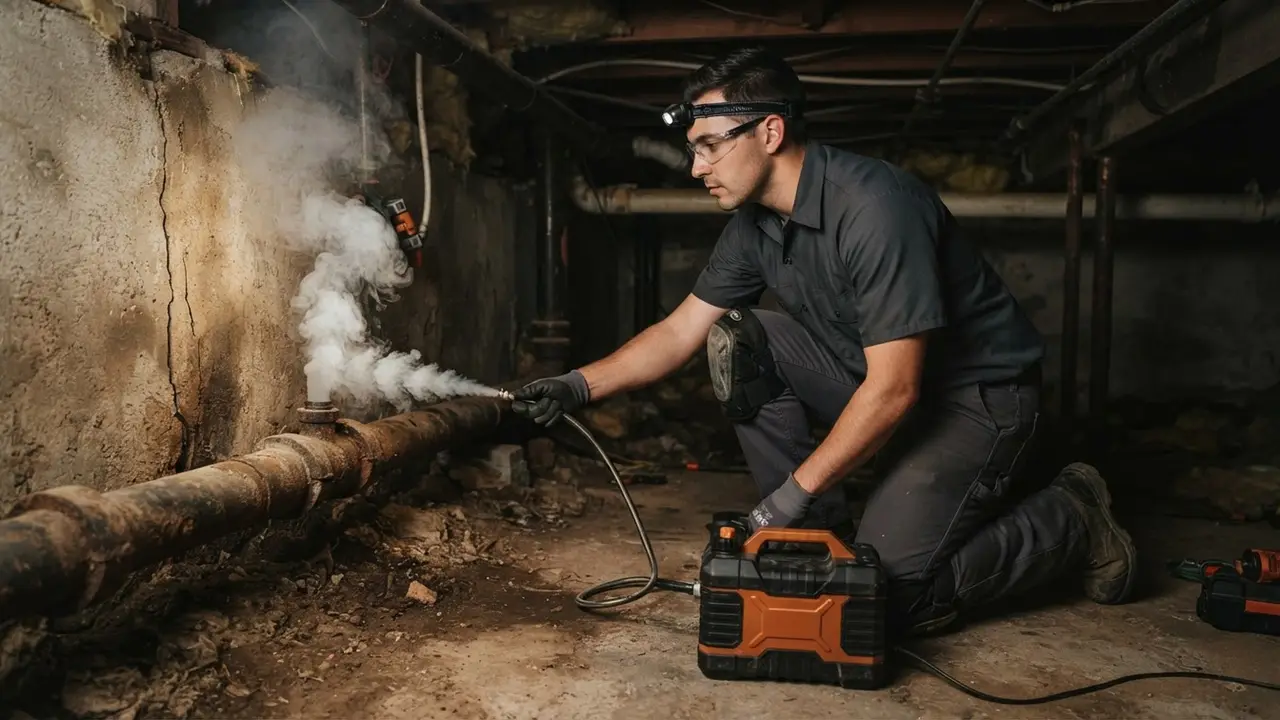 Sewer Line Leak DetectionA main line leak and a sewer line leak both show up as wet spots in the yard. We use tracer gas and pipe inspection cameras to tell them apart. Knowing which line is failing keeps the repair crew from digging up the wrong trench.Explore →
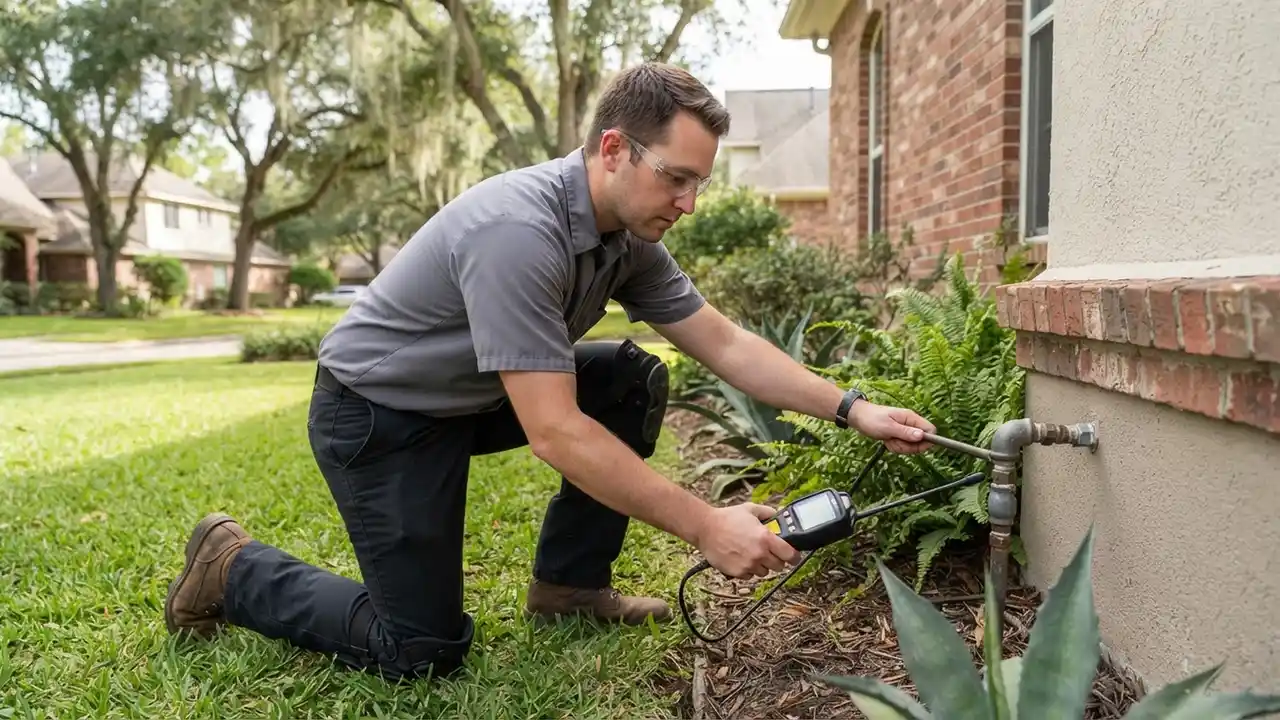 Gas Leak DetectionWhen we open a trench for a main line repair, we check nearby gas lines for corrosion. A Sewerin tracer gas detector confirms whether gas is present before anyone excavates. That protects your crew and your family during the repair.Explore →
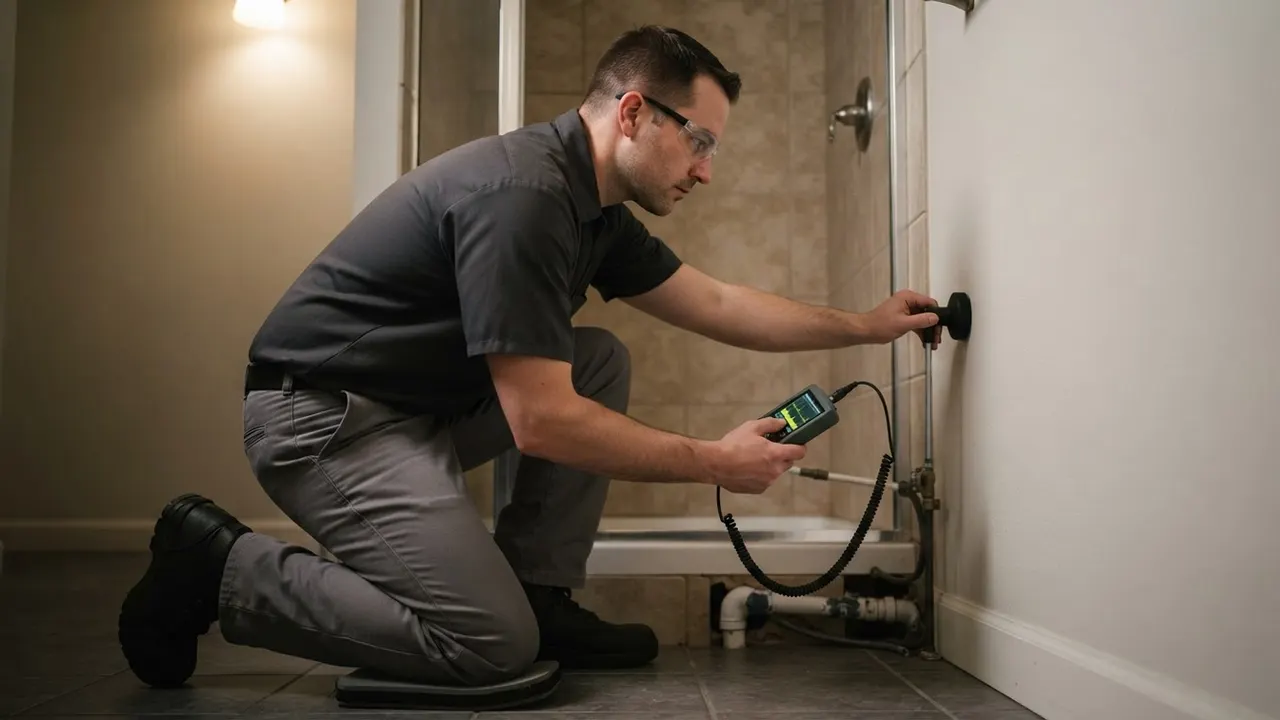 Plumbing Leak DetectionNot every leak is on the main. We isolate the supply system, test the main, and rule out fixture and branch line leaks. You get a clear answer about which part of the plumbing is losing water and what it takes to fix it.Explore →
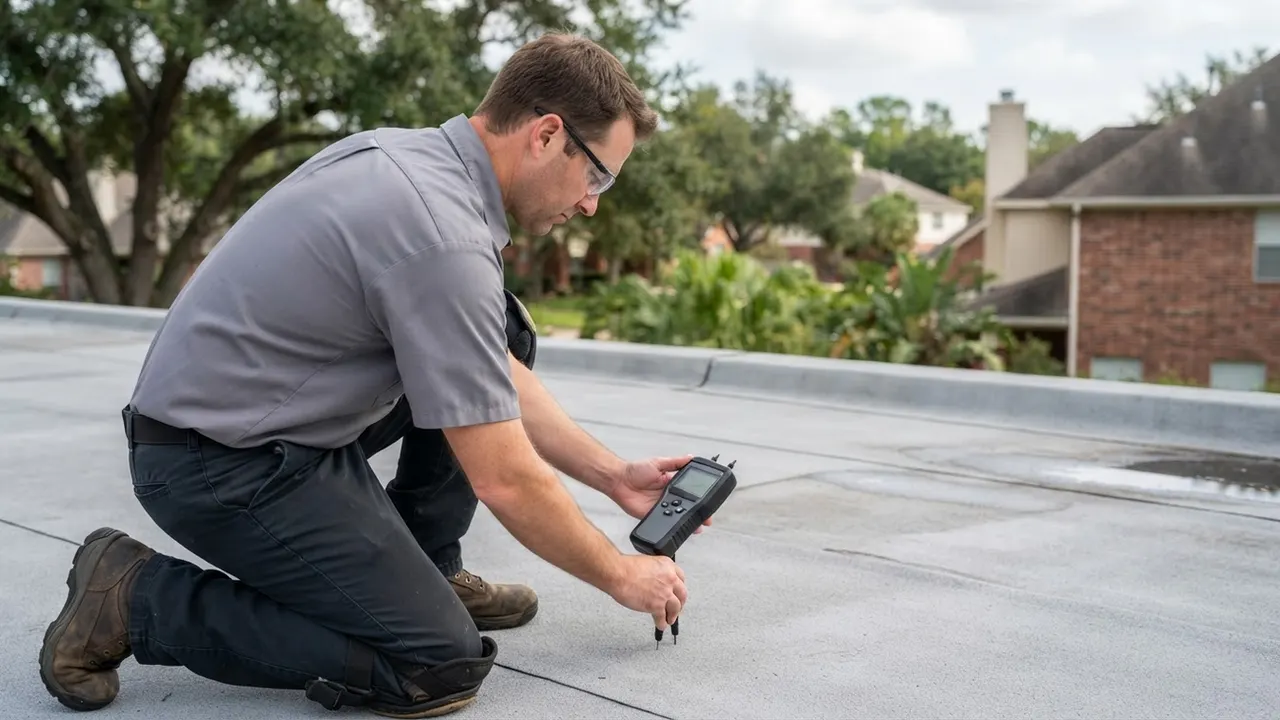 Roof Leak DetectionHouston storms drive water into attics, and that water sometimes tracks down to the meter area and looks like a main leak. We check the main first, then inspect the roof if the meter test comes back clean. No guesswork.Explore →
 Irrigation System Leak DetectionSprinkler zones lose water too, and a stuck valve can mimic a main line leak. We shut the irrigation at the backflow preventer and re-test the main. If the meter stops, the problem is irrigation, not the main.Explore →
One call gets a licensed technician to your meter with acoustic and thermal gear. We find the leak, mark it, and quote the repair the same day. Call 832-839-4984 now.
Book Detection Now 8328394984 →Call us at 832-839-4984 or send an email and we will get back to you fast. We answer the phone 24/7 for emergencies and schedule standard detections same day or next day across Houston and Harris County. Tell us what you are seeing and we will give you a flat detection price over the phone.